
Sciatica From Start to Finish: A Complete Guide to Understanding and Managing Sciatic Pain

Key Takeaways
What sciatica actually is
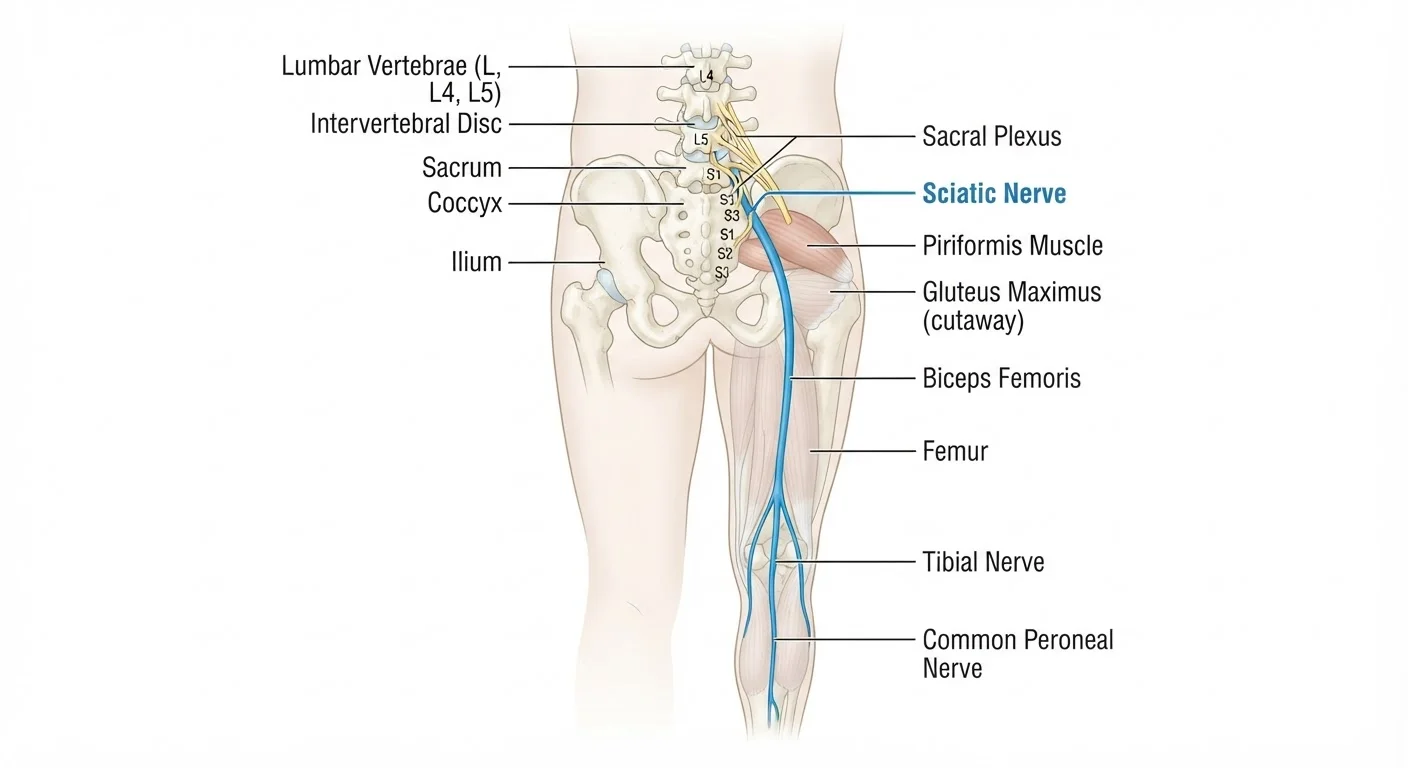
Sciatica refers to pain, numbness, or tingling that travels along the sciatic nerve, the longest nerve in the human body. This nerve originates from nerve roots at lumbar levels L4 and L5 and sacral levels S1 through S3, merges in the lower pelvis, and runs down through the buttock, back of the thigh, and into the lower leg and foot.
The term "sciatica" describes a pattern of symptoms, not a single underlying condition. Compression or irritation of the nerve at any point along its path can produce that familiar radiating discomfort. Because the nerve travels so far, the location and character of symptoms vary depending on which segment is affected.
For readers who have just received this diagnosis, our introductory guide explains what to expect in plain terms and where to begin.
Common causes and risk factors
The most frequent cause is a herniated lumbar disc. When the soft inner material of a spinal disc pushes through the outer layer, it can press against an adjacent nerve root. Degenerative disc disease, where discs thin over time and reduce the space through which nerve roots exit the spine, produces a similar effect.
Lumbar spinal stenosis, a narrowing of the spinal canal, becomes more common with age and often causes sciatica in adults over 60. Piriformis syndrome, in which the piriformis muscle in the buttock irritates the sciatic nerve nearby, is a less common but recognized source. Spondylolisthesis, where one vertebra slips forward over another, can also compress nerve roots.
Risk factors include prolonged sitting (especially with poor lumbar support), occupations involving heavy lifting or whole-body vibration, obesity, and a sedentary lifestyle. Age is a factor because spinal structures degrade gradually. Diabetes can increase nerve vulnerability, making the sciatic nerve more susceptible to compression-related symptoms.
When a flare-up strikes, avoid total rest but reduce high-load activities. Gentle walking for 10 to 15 minutes can help maintain nerve mobility without aggravating compression.
Clinical guidelines consistently support staying active during sciatica episodes because movement prevents nerve adherence and reduces sensitization, while complete rest tends to decondition supporting muscles.
If stretching the hamstrings makes radiating leg symptoms worse, stop and consult a physical therapist before continuing. Not every stretch that feels productive is appropriate during active nerve irritation.
Aggressive hamstring stretching can increase tension along an already sensitized sciatic nerve, potentially worsening symptoms rather than relieving them.
Recognizing the symptoms
The defining feature of sciatica is pain that radiates from the lower back or buttock into one leg. It may feel like a sharp electric shock, a deep ache, or a burning sensation. Most people experience symptoms on one side only.
Numbness or tingling in the thigh, calf, or foot often accompanies pain. Some people report muscle weakness in the affected leg, which can affect balance and walking. Symptoms typically worsen when sitting for long periods, coughing, sneezing, or bending forward.
Sciatica should be distinguished from referred pain from the hip or sacroiliac joint, which follows different patterns and requires different care. A healthcare provider can help separate these through clinical testing.
How sciatica is diagnosed
Diagnosis begins with a medical history and physical examination. A clinician will assess posture, range of motion, and muscle strength, and may perform the straight leg raise test. In this test, lifting the extended leg while the person lies flat reproduces sciatic symptoms if nerve root tension is present.
Imaging is not always necessary for an initial evaluation. If symptoms persist beyond six weeks, worsen progressively, or are accompanied by neurological deficits, an MRI is typically the preferred imaging tool because it shows soft tissue structures, including discs and nerve roots, in detail. X-rays reveal bone alignment but not disc or nerve pathology. CT scans may be used when MRI is not available.
Electrodiagnostic studies such as nerve conduction velocity tests or electromyography (EMG) are sometimes ordered to confirm nerve involvement and locate its level.
Non-invasive treatment options
Conservative management resolves the majority of sciatica cases. Physical therapy is the most studied first-line approach. A therapist designs an individualized program that may include nerve mobilization techniques, core strengthening, and flexibility work targeting the hip flexors and hamstrings. Early, guided movement reduces nerve sensitivity over time better than rest.
Heat and ice application can provide short-term comfort. Ice reduces local inflammation in the first 48 to 72 hours of acute flare; heat supports muscle relaxation afterward. Neither eliminates the underlying cause but both can make participation in rehabilitation more manageable.
Manual therapy, including spinal manipulation performed by a licensed chiropractor or physical therapist, has moderate evidence for reducing pain in some lumbar conditions that produce sciatica. It is generally considered safe when performed by a qualified provider on appropriate candidates.
Posture adjustments during daily activities have a direct effect on how much pressure the lumbar spine and sciatic nerve bear throughout the day. Specific posture habits for sitting, standing, and sleeping can meaningfully reduce nerve loading during flare-ups.
For a balanced look at the trade-offs between these options, see our detailed comparison of conservative sciatica approaches.
Long-term lifestyle strategies
Sustained improvement depends on habits built outside of clinic appointments. Core stability work, targeting the deep abdominal muscles (transversus abdominis) and lumbar multifidus, reduces the mechanical load on lumbar discs and nerve roots. Low-impact aerobic activity such as walking or swimming maintains disc hydration and supports overall spinal health without high compressive forces.
Body weight management reduces the mechanical load on the lumbar spine. Regular movement breaks during prolonged sitting prevent the accumulation of intradiscal pressure that develops over time in a static seated position.
Sleep position matters. Lying on one side with a pillow between the knees keeps the pelvis level and reduces torsional stress on the lumbar spine. Lying on the back with a pillow under the knees can also decompress the lower back.
A structured daily self-care audit can help identify which habits are helping and which are adding load to the nerve. Many people also benefit from reviewing common sciatica misconceptions that delay recovery, including the belief that rest is the primary treatment.
Movement and recovery strategies that reduce daily physical discomfort apply directly to long-term sciatica management as well.
When to see a healthcare provider
Most sciatica episodes improve within six to twelve weeks with consistent conservative care. However, some presentations require prompt clinical attention.
Bladder or bowel dysfunction alongside lower back and leg symptoms may indicate cauda equina syndrome, a medical emergency involving compression of the nerve bundle at the base of the spine. Seek immediate evaluation if these symptoms appear together.
Progressive leg weakness, numbness that spreads, or symptoms that worsen despite several weeks of appropriate self-care are also reasons to return to a provider. A clinician can reassess whether the diagnosis is correct and whether additional imaging or a specialist referral is needed.
This article is for general health information only and does not substitute for a clinical evaluation. Anyone experiencing new or worsening neurological symptoms should consult a qualified healthcare professional promptly.
This article is for informational purposes only and is not medical advice. Consult a licensed healthcare provider before beginning any treatment program or if you have concerns about your symptoms.