

Key Takeaways
Our Verdict
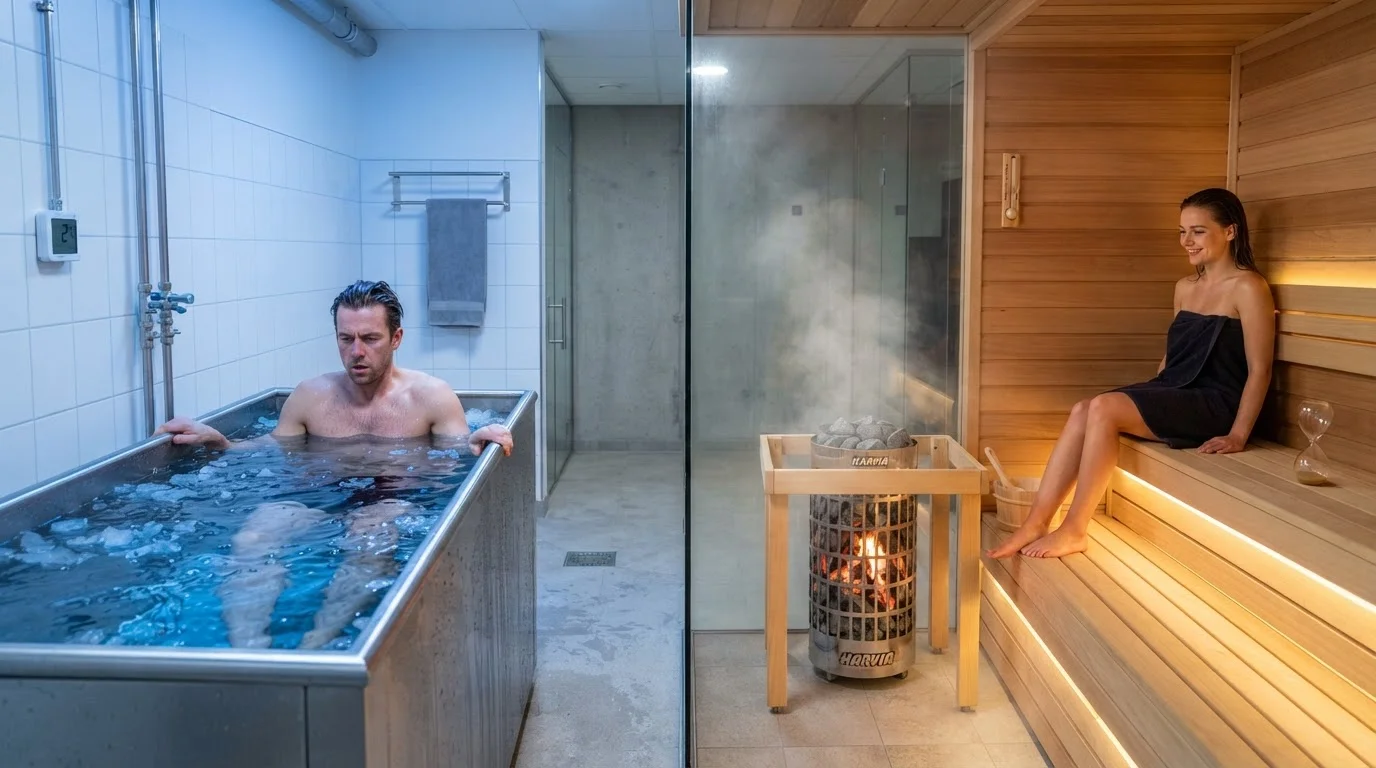
Cold water immersion and heat therapy each have a distinct physiological basis and work best in different recovery contexts. Cold is more appropriate in the hours after intense exercise to manage acute inflammation and soreness. Heat is better applied to chronic muscular tension, stiffness, or as preparation before movement. Choosing between them means matching the therapy to the specific recovery need rather than treating either as a default.
| Best for | Recommended |
|---|---|
| Managing acute post-exercise soreness and inflammation | Cold water immersion |
| Relieving chronic muscle tension and stiffness | Heat therapy |
| Pre-activity preparation to increase tissue pliability | Heat therapy |
| Those exploring circulation support with medical clearance | Contrast therapy |
How cold water immersion affects the body
Cold water immersion (CWI) involves submerging part or all of the body in water typically between 50 and 59 degrees Fahrenheit (10 to 15 degrees Celsius) for a set duration, often 10 to 15 minutes. The immediate effect is vasoconstriction: blood vessels narrow in response to the drop in temperature, reducing local blood flow and limiting the accumulation of metabolic waste products in exercised tissue.
This vascular response is paired with a reduction in nerve conduction velocity, which is part of why soreness and perceived pain decrease after immersion. Core body temperature drops slightly, and metabolic rate slows in the cooled tissue, which may limit secondary cellular damage that can occur in the hours following intense physical stress. Research published in journals including the Journal of Physiology has found measurable reductions in perceived muscle soreness 24 to 48 hours after immersion, though the magnitude varies across study populations and exercise types.
A practical consideration is that CWI may blunt some of the cellular signaling that drives strength and hypertrophy adaptations when applied routinely after resistance training. This does not make it harmful, but it does mean timing and context matter for those with specific performance goals. For more on the biological processes behind recovery, see what happens inside your body during recovery.
How heat therapy affects the body
Heat therapy works through the opposite vascular mechanism. Applied warmth causes vasodilation, widening blood vessels and increasing circulation to the targeted area. This elevated blood flow delivers oxygen and nutrients to muscle tissue while removing metabolic byproducts. Connective tissue also becomes more pliable at higher temperatures, which can reduce stiffness and improve range of motion.
Common heat delivery methods include moist heat packs, heated pads, warm baths, and sauna sessions. Sauna use, particularly Finnish dry sauna, has attracted research attention in recent years. Observational data from Finnish cohort studies has linked regular sauna use with cardiovascular markers, though those studies measure association rather than direct causation and involved specific populations.
Heat is generally less appropriate in the acute phase immediately after tissue injury or intense exercise, when inflammation is already elevated. Applying heat too early can amplify swelling rather than reduce it. Chronic muscular tension, general stiffness, and pre-exercise preparation are contexts where heat shows a more consistent benefit. People with cardiovascular conditions, pregnancy, or certain skin sensitivities should consult a healthcare professional before using heat therapy. For applications in a specific pain context, see heat and cold therapy for sciatica.
| Cold water immersion | Heat therapy | |
|---|---|---|
| Primary vascular effect | Vasoconstriction | Vasodilation |
| Best timing | 1-2 hours post-exercise | Before activity or for chronic tension |
| Effect on inflammation | Reduces acute inflammation | Can worsen acute inflammation |
| Effect on muscle soreness | Reduces perceived soreness | Reduces stiffness, less effect on acute soreness |
| Tissue pliability | Reduces temporarily | Increases |
| Main contraindications | Cold sensitivity, Raynaud's, cardiovascular issues | Acute injury, cardiovascular conditions, pregnancy |
Contrast therapy and the evidence behind alternating methods
Contrast therapy alternates between cold and heat exposure, typically cycling through both within a single session. The rationale is that repeated vasoconstriction and vasodilation create a pumping effect that may clear metabolic waste more efficiently than either method alone. Some athletes and sports medicine clinicians use this approach after competition or high-volume training blocks.
The evidence base for contrast therapy is real but modest. A 2021 systematic review in the British Journal of Sports Medicine found that contrast water therapy reduced muscle soreness more than passive rest but did not consistently outperform CWI alone. Effect sizes were small and heterogeneity across studies was high, meaning results should be interpreted with caution.
Contrast therapy may be worth considering for those who find cold immersion alone too uncomfortable or who want variety in their recovery routine. It should not be used immediately after acute musculoskeletal injury, and the same contraindications that apply to each individual method apply here. See also what research shows about foam rolling and massage for another perspective on evidence-based recovery tools.
Match the method to the moment
A simple guideline: if the tissue is acutely inflamed or you finished a hard workout within the past few hours, cold is generally the more appropriate first choice. If you are stiff, moving into exercise, or managing ongoing muscular tension without acute inflammation, heat is likely more useful. When in doubt, passive rest and hydration are safe defaults while you assess what your body needs.
Fitting these methods into a broader recovery plan
Cold water immersion and heat therapy are adjunct tools within a recovery framework, not standalone solutions. Quality sleep remains the most consistent driver of tissue repair and hormonal recovery. Both CWI and heat therapy can support the conditions that make sleep more effective, such as reduced soreness and lower core body temperature before bed, but neither replaces the restorative function of sleep itself.
Choosing between these methods should account for the type and intensity of physical stress, the timing relative to that stress, and any individual health factors. Acute, high-intensity exercise followed by CWI within one to two hours has the best-supported evidence for soreness reduction. Heat applied in the evening may support relaxation and sleep onset for some individuals, though very high temperatures close to bedtime can interfere with the natural drop in core body temperature that facilitates sleep.
For readers navigating different types of physical strain, active recovery versus complete rest and active versus passive rest after physical strain offer additional context on matching recovery type to need. General movement strategies are also covered under mobility and recovery.
This article is for informational purposes only and is not medical advice. Consult a qualified healthcare professional before beginning any new recovery practice, particularly if you have cardiovascular conditions, a history of cold sensitivity, or any chronic health concern.