

| Number of known human hormones | Over 50 (Endocrine Society reference materials) |
| Cortisol peak timing after waking | 30 to 45 minutes (Circadian biology research) |
| Gut origin of body's serotonin | Approximately 90% (Gastrointestinal physiology literature) |
| Primary regulator of thyroid hormones | TSH from the pituitary gland (Standard endocrinology references) |
| Hormone class most affected by sleep loss | Testosterone and growth hormone (Sleep and endocrinology research) |
Why hormones govern your daily experience
Hormones are chemical messengers produced by glands throughout the body. They travel through the bloodstream and bind to receptors on target cells, triggering specific biological responses. Because they operate in cascades and feedback loops, a shift in one hormone often ripples through several others.
Understanding which hormones do what gives you a clearer picture of why energy and mood fluctuate across the day, across the month, and across life stages. For a broader look at what hormonal balance means physiologically, see Hormonal Balance Explained. This reference covers the major players most directly tied to energy regulation, mood stability, and daily vitality.
| Number of known human hormones | Over 50 (Endocrine Society reference materials) |
| Cortisol peak timing after waking | 30 to 45 minutes (Circadian biology research) |
| Gut origin of body's serotonin | Approximately 90% (Gastrointestinal physiology literature) |
| Primary regulator of thyroid hormones | TSH from the pituitary gland (Standard endocrinology references) |
| Hormone class most affected by sleep loss | Testosterone and growth hormone (Sleep and endocrinology research) |
The core hormones and what they do
Cortisol is produced by the adrenal glands and follows a well-documented daily pattern called the cortisol awakening response. Levels peak within 30 to 45 minutes of waking, supporting alertness and glucose mobilization, then decline through the afternoon and evening. Chronically elevated cortisol, often associated with prolonged psychological stress, is linked to disrupted sleep, impaired memory consolidation, and suppressed immune function. Structuring your morning and evening routines around this rhythm can support more consistent energy, as outlined in Building a Daily Routine That Works With Your Hormonal Rhythms.
Melatonin is synthesized in the pineal gland from serotonin and released in response to darkness. Its primary role is to signal the brain that it is time to sleep, not to generate sleep directly. Light exposure, especially short-wavelength blue light in the evening, suppresses melatonin and can delay sleep onset.
Insulin is released by the pancreas in response to rising blood glucose. It facilitates glucose entry into cells, supporting energy production. Insulin sensitivity, meaning how effectively cells respond to the hormone's signal, affects not only blood sugar stability but also cognitive performance. Poor insulin regulation is associated with brain fog and fatigue.
Thyroid hormones (thyroxine, T4, and triiodothyronine, T3) govern the rate of metabolism in nearly every cell. Low thyroid output can produce fatigue, depression, cold intolerance, and cognitive slowing. The thyroid itself is regulated by thyroid-stimulating hormone (TSH) from the pituitary gland, making it part of a tightly controlled feedback system.
Estrogen and progesterone fluctuate across the menstrual cycle, influencing serotonin and GABA (gamma-aminobutyric acid) signaling. Estrogen tends to support mood and verbal memory; progesterone has calming, sleep-promoting properties. Both decline significantly at menopause, which is why mood and sleep disruptions are common during that transition.
Testosterone is present in both sexes and affects motivation, physical energy, libido, and muscle maintenance. It declines gradually with age in men, and can be suppressed in both sexes by chronic stress, sleep deprivation, and nutritional deficits. Hormonal Fluctuations Across a Lifetime details how these shifts occur across puberty and older adulthood.
Serotonin is synthesized primarily in the gut (approximately 90% of the body's supply) and in the brain. In the central nervous system, it modulates mood, appetite, and sleep-wake cycles. Low serotonergic activity is associated with depressive symptoms and irritability. Because the gut produces most of the body's serotonin, gut health and dietary patterns are directly relevant to serotonin availability, a topic covered in Dietary Patterns That Support Healthy Hormone Regulation.
Dopamine drives motivation, reward-seeking, and the anticipation of pleasurable outcomes. Dopaminergic circuits also regulate attention and working memory, which is why dopamine is central to mental clarity and focus strategies.
Endocrine system
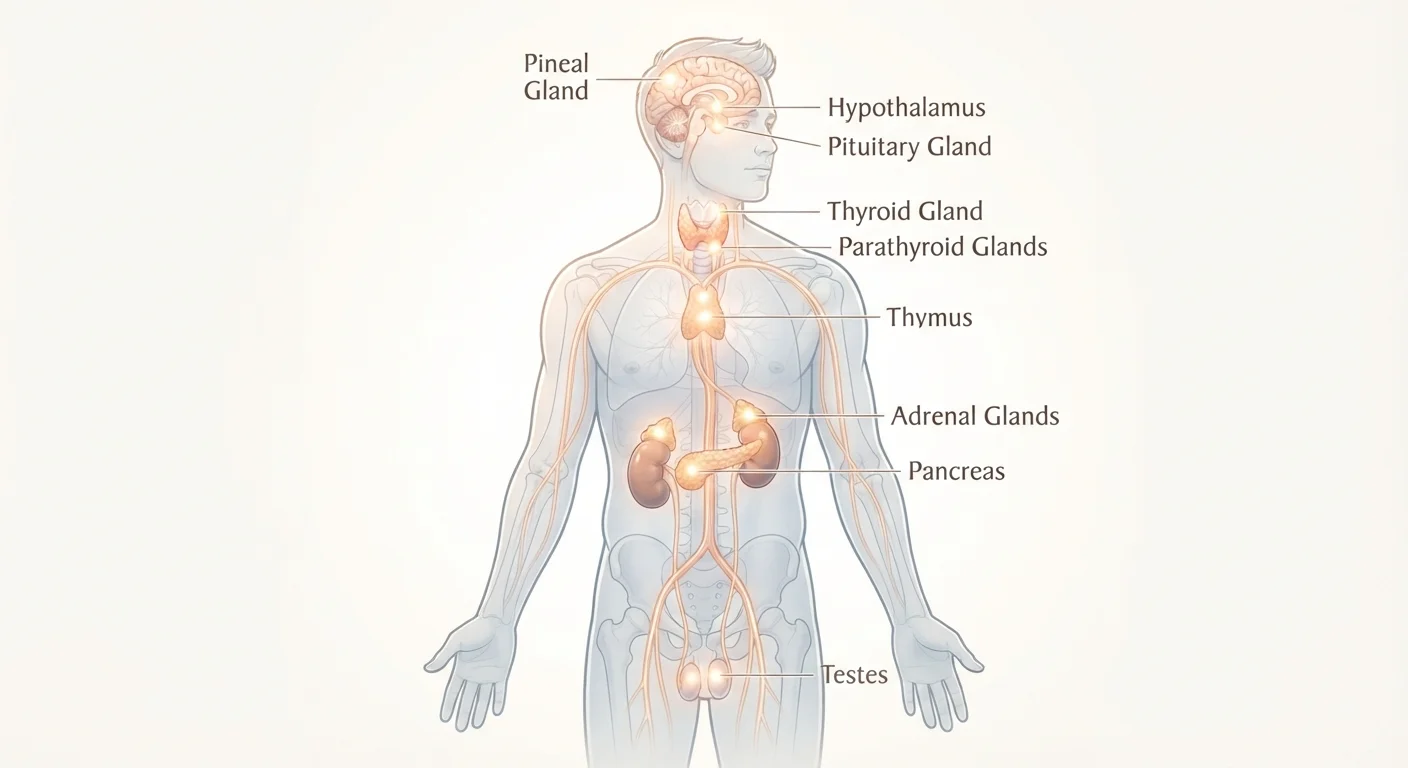
The network of glands and organs that produce, store, and release hormones into the bloodstream. Major components include the hypothalamus, pituitary, thyroid, adrenal glands, pancreas, and gonads.
HPA axis
The hypothalamic-pituitary-adrenal axis is a feedback loop that regulates cortisol release in response to stress. Chronic activation of this axis can disrupt sleep, immunity, and reproductive hormones.
Insulin sensitivity
A measure of how effectively cells respond to insulin's signal to absorb glucose. Higher sensitivity means less insulin is needed to manage blood sugar; lower sensitivity is associated with fatigue and cognitive impairment.
Cortisol awakening response
A normal, healthy surge of cortisol that occurs within 30 to 45 minutes of waking. It mobilizes energy stores and sharpens alertness, and is considered part of the body's circadian rhythm.
Serotonergic activity
Refers to the level of signaling that occurs through serotonin receptors in the brain and body. Reduced serotonergic activity is associated with depressive symptoms, irritability, and disrupted sleep.
T3 and T4
Triiodothyronine (T3) and thyroxine (T4) are the two primary thyroid hormones. T4 is produced in larger quantities but must be converted to the more active T3 to exert most of its metabolic effects.
Factors that disrupt hormonal output
Several modifiable factors consistently affect hormonal signaling. Sleep deprivation reduces testosterone and growth hormone while raising cortisol. Nutritional deficits in zinc, magnesium, vitamin D, and omega-3 fatty acids impair synthesis and receptor sensitivity across multiple hormonal systems. The liver metabolizes and clears used hormones, particularly estrogen. When hepatic clearance is impaired, hormones can recirculate and create imbalances; for context on liver function and metabolic health, see Liver Health.
Sustained psychological stress activates the hypothalamic-pituitary-adrenal (HPA) axis, raising cortisol and suppressing both reproductive and thyroid hormones. Cardiovascular health and hormone regulation also interact: poor circulation reduces delivery of hormonal signals to target tissues, while hormones such as aldosterone and cortisol affect blood pressure directly. Building a Daily Routine That Supports Healthy Blood Pressure addresses the lifestyle side of that relationship.
This article is for general informational purposes only and is not medical advice. If you are experiencing symptoms you believe are related to hormonal imbalance, consult a qualified healthcare provider for evaluation and guidance.