

Key Takeaways
The digestive system
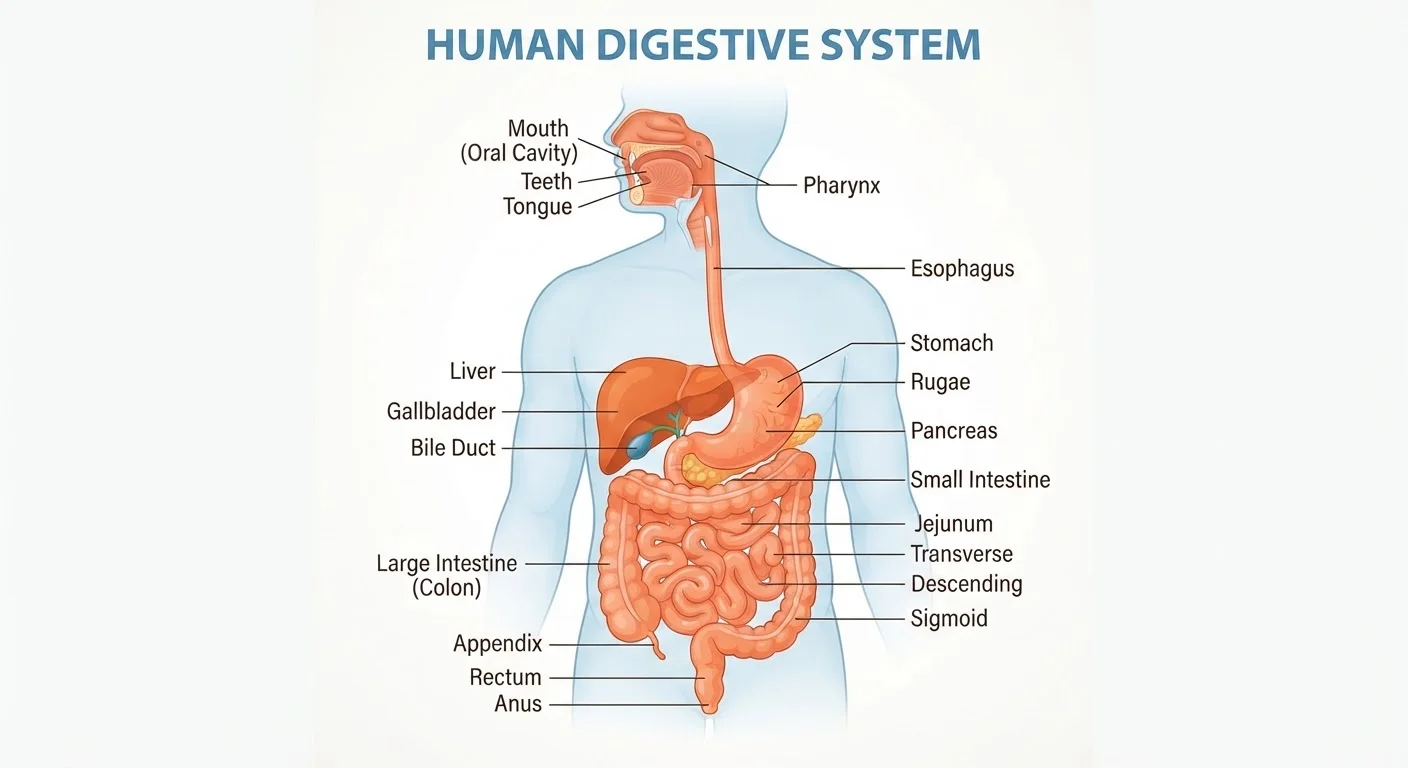
The digestive system is the network of organs that breaks food down into nutrients your body can absorb and use for energy, repair, and growth. It runs from the mouth to the large intestine, with each organ handling a specific part of the process. Digestion involves both mechanical actions, like chewing, and chemical reactions driven by enzymes and acids.
The enteric nervous system, sometimes called the 'second brain,' lines the gastrointestinal tract with over 100 million nerve cells that coordinate muscle contractions and secretion largely independent of the brain.
The mouth: where digestion starts
Every meal begins with two simultaneous processes. Teeth break food into smaller pieces, increasing its surface area for enzymes to act on. At the same time, salivary glands release saliva containing amylase, an enzyme that begins converting starches into simpler sugars. By the time you swallow, food has already undergone meaningful chemical change.
The tongue shapes chewed food into a ball called a bolus and pushes it toward the throat. Swallowing triggers a coordinated reflex that closes the airway and opens the esophagus. The esophagus moves the bolus downward through rhythmic muscle contractions called peristalsis, a wave-like action that continues throughout the digestive tract. Transit from mouth to stomach takes roughly 10 seconds.
The stomach: acid, enzymes, and chyme
The stomach is a muscular pouch that performs two jobs: chemical breakdown and mechanical churning. Gastric glands in its lining secrete hydrochloric acid, which drops the stomach's pH to between 1.5 and 3.5. This environment denatures proteins, making them accessible to the enzyme pepsin, which begins cleaving them into smaller peptide chains. Acid also kills most ingested pathogens.
The stomach's muscular walls contract and relax to grind food against the acid-enzyme mixture. After 2 to 4 hours, this produces a semi-liquid substance called chyme. The pyloric sphincter, a muscular valve at the stomach's exit, releases small amounts of chyme into the small intestine at a regulated rate, preventing the intestine from being overwhelmed.
~30 sq m
Absorptive surface area of the small intestine
The villi and microvilli of the small intestinal lining create a total surface area estimated at approximately 30 square meters, according to gastrointestinal anatomy research.
10 to 59 hrs
Large intestine transit time range
Research on colonic transit shows that material can remain in the large intestine anywhere from 10 to nearly 60 hours, varying substantially by individual and diet.
100+ million
Nerve cells lining the gut wall
The enteric nervous system contains more than 100 million neurons embedded in the gastrointestinal tract wall, enabling largely autonomous gut function.
For a broader view of how supporting one organ affects others, the liver health hub covers how the liver works alongside the digestive system in metabolic processing.
The small intestine: absorption in detail
At roughly 20 feet long, the small intestine is where the majority of nutrient absorption happens. Its inner lining is arranged in circular folds covered with villi, tiny projections each bearing a brush border of microvilli. This architecture creates a surface area estimated at around 30 square meters, comparable to a studio apartment floor, allowing efficient uptake of nutrients across a short span of time.
As chyme enters the first section of the small intestine, the duodenum, the pancreas releases digestive enzymes including lipase, protease, and amylase. The gallbladder secretes bile to emulsify dietary fats. Carbohydrates, proteins, and fats are broken into their component units: monosaccharides, amino acids, and fatty acids. These molecules cross the intestinal wall and enter the bloodstream or the lymphatic system, which you can explore further in the lymphatic system hub.
Vitamins and minerals are absorbed along this stretch as well. Fat-soluble vitamins (A, D, E, K) travel with fat through the lymphatic route, while water-soluble vitamins and minerals pass directly into the blood.
The large intestine: water, microbes, and waste
Material that the small intestine cannot absorb passes into the large intestine, or colon. The colon's primary function is reclaiming water and electrolytes from this residue. As water is reabsorbed, the contents thicken progressively. The colon moves material through haustral contractions, slower movements than the peristalsis in the small intestine, taking anywhere from 10 to nearly 60 hours to complete transit.
The large intestine also hosts the densest concentration of the gut microbiome. Bacteria ferment undigested dietary fiber, producing short-chain fatty acids such as butyrate, which nourish colon cells and have documented roles in intestinal barrier integrity. To understand what else these microorganisms do, see our guide to what lives in your gut.
Waste that remains after absorption collects in the rectum and is eliminated through the anus. Stool composition, frequency, and consistency can reflect the health of the entire system upstream, which is why changes in bowel habits lasting more than a few days should prompt a conversation with a healthcare provider.
Supporting everyday digestive function
Understanding how each segment of the digestive tract works points toward practical habits that support the whole system. Chewing thoroughly reduces the mechanical load on the stomach and speeds enzyme contact with food. Adequate fiber from vegetables, legumes, and whole grains gives colon bacteria the substrate they need and improves transit time. Hydration matters throughout: water is absorbed at multiple points and influences stool consistency.
Physical activity stimulates intestinal motility. Chronic stress, by contrast, can disrupt the enteric nervous system and alter gastric emptying rates, which is part of why digestive complaints often worsen during anxious periods. Sleep has an emerging evidence base connecting poor sleep to reduced microbial diversity. The comprehensive guide to digestive support covers these dimensions in more depth, and foods linked to better digestive function details specific dietary choices with documented effects.
Practical habits for better digestion
Chewing each bite thoroughly, eating without distraction, and spacing meals to allow gastric emptying are simple practices with measurable effects on digestive comfort. Prioritizing fiber-rich whole foods and consistent hydration supports the colon and its microbial community. If symptoms persist or are severe, speak with a gastroenterologist rather than adjusting diet alone.
The gut's connection to the rest of the body extends well beyond digestion. Our article on how the gut shapes whole-body health explores how signals from the digestive tract reach the brain, immune system, and other organs.
This article is for informational purposes only and is not medical advice. Consult a qualified healthcare professional for concerns about your digestive health or any symptoms you are experiencing.