

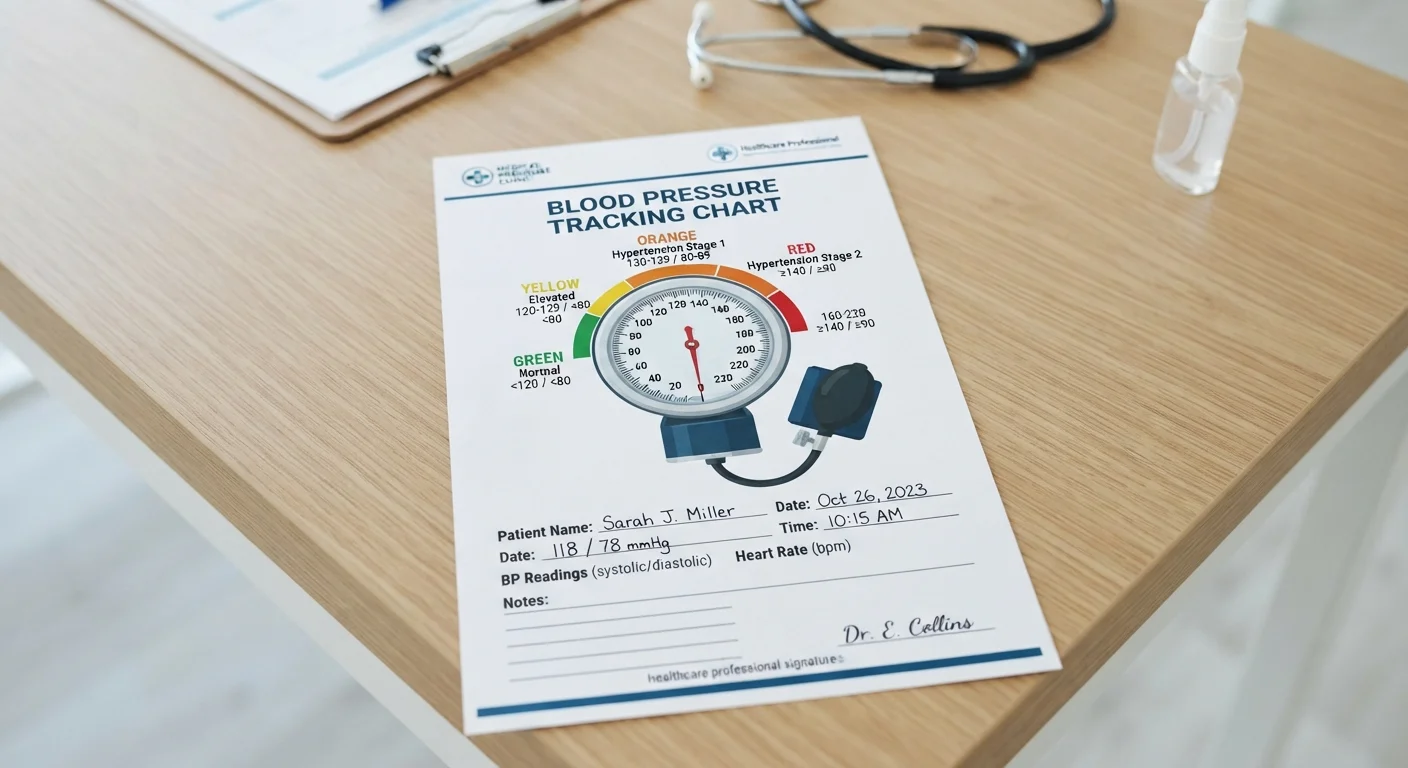
| Normal range | Less than 120/80 mm Hg (American College of Cardiology / American Heart Association guidelines) |
| Elevated range | 120-129 systolic / less than 80 diastolic (ACC/AHA 2017 guidelines) |
| Stage 1 hypertension | 130-139 / 80-89 mm Hg (ACC/AHA 2017 guidelines) |
| Stage 2 hypertension | 140/90 mm Hg or higher (ACC/AHA 2017 guidelines) |
| Hypertensive crisis threshold | Higher than 180/120 mm Hg (ACC/AHA 2017 guidelines) |
| Unit of measurement | Millimeters of mercury (mm Hg) |
Why blood pressure categories matter
Blood pressure is recorded as two numbers: the systolic pressure (the force when your heart beats) over the diastolic pressure (the force between beats). If those terms are unfamiliar, the explainer on systolic and diastolic readings covers the mechanics in detail.
The American College of Cardiology and the American Heart Association classify blood pressure into five distinct categories. Each category reflects a different level of cardiovascular risk and calls for a different response, from continued monitoring to urgent medical attention. Knowing where a reading falls is the first step toward an informed conversation with a clinician.
| Normal range | Less than 120/80 mm Hg (American College of Cardiology / American Heart Association guidelines) |
| Elevated range | 120-129 systolic / less than 80 diastolic (ACC/AHA 2017 guidelines) |
| Stage 1 hypertension | 130-139 / 80-89 mm Hg (ACC/AHA 2017 guidelines) |
| Stage 2 hypertension | 140/90 mm Hg or higher (ACC/AHA 2017 guidelines) |
| Hypertensive crisis threshold | Higher than 180/120 mm Hg (ACC/AHA 2017 guidelines) |
| Unit of measurement | Millimeters of mercury (mm Hg) |
The five categories, defined
Normal (less than 120/80 mm Hg). A reading below 120 systolic and below 80 diastolic is considered normal. Cardiovascular risk at this level is low, and the general recommendation is to maintain the habits that support it: consistent physical activity, a diet low in sodium, and avoiding tobacco.
Elevated (120-129 systolic / less than 80 diastolic). The systolic number has risen, but diastolic remains below 80. This category carries no symptoms and no medication recommendation, yet it is a meaningful signal. Without lifestyle changes, many people with elevated blood pressure develop Stage 1 hypertension within a few years.
Stage 1 hypertension (130-139 / 80-89 mm Hg). At this stage, the cardiovascular system is under measurable additional strain. Clinicians typically assess ten-year cardiovascular risk before recommending whether lifestyle modification alone is sufficient or whether medication is appropriate. Dietary changes, weight management, and increased physical activity are the primary tools.
Stage 2 hypertension (140/90 mm Hg or higher). A reading at or above 140 systolic or 90 diastolic on two or more separate occasions generally warrants both lifestyle intervention and medication, though treatment decisions remain individualized. Sustained Stage 2 readings are associated with increased risk of heart attack, stroke, kidney disease, and vision problems.
Hypertensive crisis (higher than 180/120 mm Hg). This is a medical emergency. A reading above 180 systolic or above 120 diastolic requires immediate evaluation. If accompanied by symptoms such as chest pain, shortness of breath, severe headache, or changes in vision, call emergency services without delay. Even without symptoms, a reading this high warrants same-day contact with a healthcare provider.
Systolic pressure
The top number in a blood pressure reading. It measures the force exerted on artery walls when the heart contracts to pump blood.
Diastolic pressure
The bottom number in a blood pressure reading. It measures arterial pressure between heartbeats, when the heart is at rest.
Hypertension
A condition in which blood pressure is consistently at or above 130/80 mm Hg. It is often called a silent condition because most people have no symptoms.
Hypertensive crisis
A severe and potentially life-threatening spike in blood pressure above 180/120 mm Hg. It requires immediate medical evaluation.
White-coat hypertension
Elevated blood pressure readings recorded in a clinical setting that do not reflect the person's typical pressure at home or elsewhere.
Masked hypertension
A pattern where blood pressure appears normal in a clinical setting but is elevated when measured outside the clinic, such as during home monitoring.
What single readings do and do not tell you
One measurement is rarely the whole picture. Blood pressure fluctuates throughout the day in response to activity, stress, caffeine, posture, and even conversation. Clinicians diagnose hypertension based on consistently elevated readings across multiple visits, or through validated home monitoring over time.
White-coat hypertension, where readings are elevated in a clinical setting but normal at home, is a documented phenomenon. The reverse also occurs: masked hypertension produces normal clinic readings while home values remain elevated. Both patterns affect how clinicians interpret results, which is why a single office reading is a starting point rather than a verdict.
For context on how age changes the interpretation of these numbers, the article on blood pressure across the lifespan is a useful companion. Readers managing multiple metabolic concerns may also find it worth comparing these ranges against glucose categories covered in the blood sugar reference guide.
This article is for informational purposes only and is not medical advice. Always consult a qualified healthcare professional for personal guidance on blood pressure management, diagnosis, or treatment.