
Blood Pressure Across the Lifespan: How Readings Change from Youth to Older Age

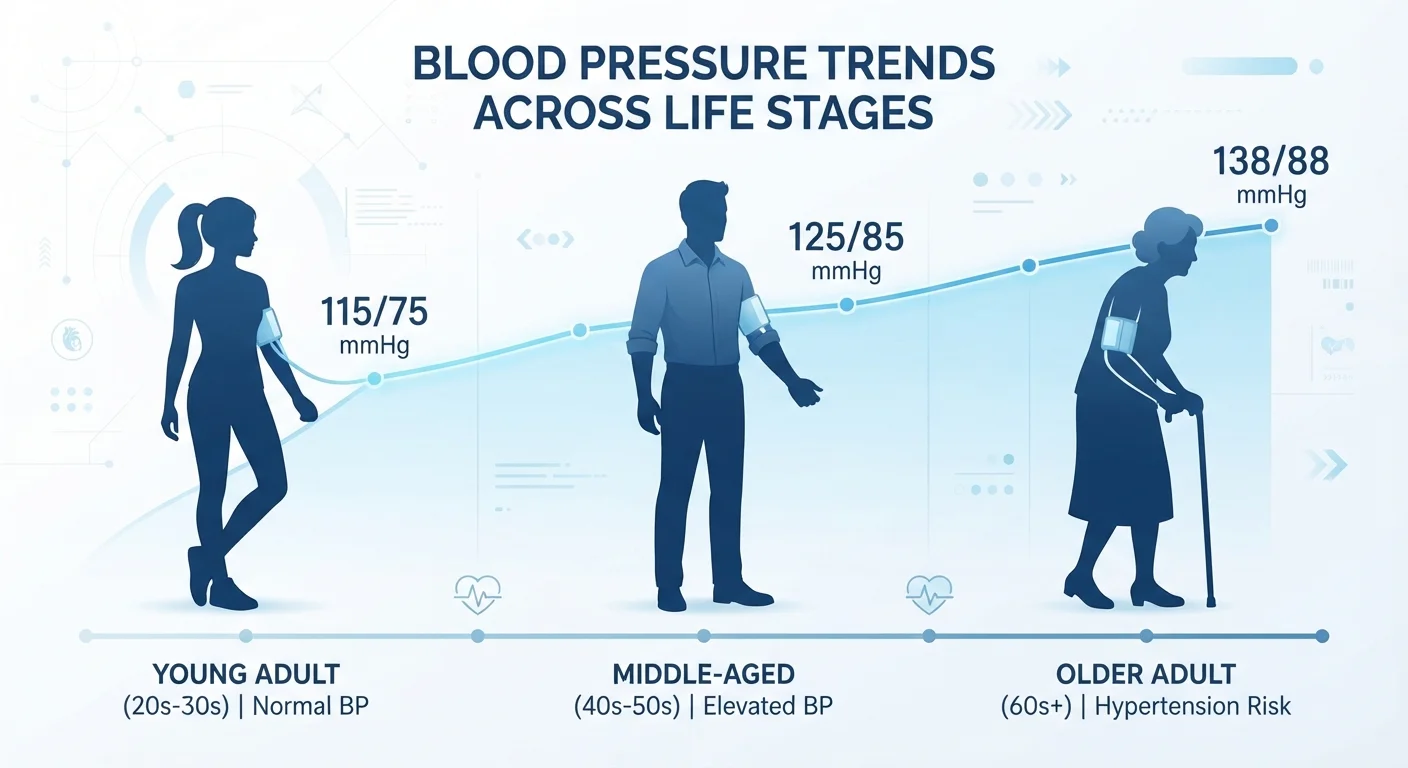
Why age changes your blood pressure baseline
Blood pressure is not a fixed number. It shifts throughout the day and, more meaningfully, across decades of life. Understanding why those shifts happen helps you interpret your own readings in context rather than comparing a 60-year-old reading to a 25-year-old standard.
The two numbers in a blood pressure reading reflect different forces. Systolic pressure (the top number) is the pressure in your arteries when your heart contracts. Diastolic pressure (the bottom number) is the pressure when your heart rests between beats. See what systolic and diastolic actually measure for a fuller explanation of both numbers.
The main structural reason blood pressure tends to rise with age is arterial stiffening. Elastic fibers in artery walls, particularly elastin, degrade over time. Stiffer arteries cannot absorb the pulse of each heartbeat as efficiently, so systolic pressure climbs. This process is gradual and begins earlier than most people expect, with measurable changes visible in arterial studies conducted in adults in their 30s.
Blood pressure by life stage: what the data show
Pediatric and adolescent readings are generally lower than adult norms. During childhood, systolic pressure typically ranges from roughly 80 to 110 mm Hg, rising steadily through puberty as the cardiovascular system matures and body mass increases. Hormonal surges during adolescence, particularly androgens in males, contribute to higher readings compared to same-age females, a gap that persists into early adulthood.
In young adults (roughly 18 to 39), a reading below 120/80 mm Hg is considered normal by current U.S. guidelines. Diastolic pressure is often the more dynamic number during this period, reflecting vascular tone that responds briskly to stress, caffeine, or exercise. Daily fluctuations in blood pressure are normal at this stage and do not by themselves indicate a problem.
From roughly age 40 onward, systolic readings tend to climb while diastolic pressure can plateau or even decline in later decades. This pattern, sometimes called isolated systolic hypertension when systolic reaches 130 mm Hg or above without a corresponding diastolic rise, is the most common form of high blood pressure in adults over 60. The five blood pressure categories defined by current guidelines apply regardless of age, though clinicians weigh age context when deciding on treatment thresholds.
Hormonal changes at midlife, particularly the drop in estrogen during and after menopause, accelerate arterial stiffening in women. Before menopause, women generally have lower average blood pressure than men of the same age. After menopause, that difference narrows substantially. The broader pattern of hormonal shifts across the lifespan intersects with cardiovascular risk in ways clinicians now monitor more closely for female patients.
Special considerations and when to seek guidance
High blood pressure in older adults is common, but "common" does not mean it requires no attention. Sustained readings at or above 130/80 mm Hg, across multiple measurements taken correctly, warrant discussion with a clinician. Accurate home monitoring technique matters here because a single clinic reading can reflect anxiety or posture rather than a true baseline.
Orthostatic hypotension, a rapid drop in blood pressure on standing, becomes more common with age and certain medications. It produces dizziness or lightheadedness and carries fall risk in older adults, so it deserves separate evaluation from resting hypertension.
For people managing other metabolic conditions, blood pressure readings do not exist in isolation. The liver processes many antihypertensive medications and influences sodium retention, so liver health is relevant for anyone on long-term blood pressure treatment. Similarly, cholesterol and blood pressure trends often track together across decades; how cholesterol shifts across the lifespan offers a parallel reference.
People in special populations, including pregnant individuals, children, and those with chronic kidney or heart disease, require individualized blood pressure targets that a clinician should set. General reference ranges do not substitute for personalized medical evaluation.
This article is for general informational purposes only and is not medical advice. Consult a qualified healthcare professional for guidance on your individual blood pressure readings, treatment decisions, or any symptoms you are experiencing.