
Type 1, Type 2, and Prediabetes: Understanding the Differences That Matter

Key Takeaways
Option A
Type 1 Diabetes
An autoimmune condition requiring lifelong insulin therapy.
Best for: Understanding an immune-driven form of diabetes that can appear at any age but is commonly diagnosed in children and young adults.
Option B
Type 2 Diabetes and Prediabetes
A metabolic condition shaped by insulin resistance and lifestyle factors.
Best for: Adults seeking to understand the most common form of diabetes and the earlier stage where intervention can change the trajectory.
If you want to understand an autoimmune form of diabetes with no lifestyle cause
Type 1 Diabetes
Type 1 involves the immune system attacking insulin-producing beta cells. Lifestyle factors do not cause it, and insulin therapy is required from diagnosis onward.
If your lab results show elevated fasting glucose but no diabetes diagnosis yet
Type 2 Diabetes and Prediabetes
Prediabetes is the relevant stage to understand. Research indicates that structured lifestyle changes can delay or prevent progression to Type 2 diabetes.
If you have a family history of Type 2 diabetes and want to assess your risk
Type 2 Diabetes and Prediabetes
Type 2 has a significant genetic component alongside lifestyle factors. Understanding how insulin resistance develops is the most actionable starting point.
If you are a parent concerned about a child's sudden symptoms like excessive thirst or unexplained weight loss
Type 1 Diabetes
These symptoms in children more often point to Type 1 diabetes, an urgent condition requiring prompt medical evaluation. Seek care without delay.
What separates these three conditions at the biological level
All three conditions involve blood glucose that exceeds what the body handles well, but the underlying reasons are distinct. How the body regulates blood sugar between meals matters here: the pancreas releases insulin so that cells can absorb glucose from the bloodstream. When that system breaks down, glucose accumulates.
In Type 1 diabetes, the immune system mistakenly destroys the beta cells in the pancreas that produce insulin. The result is a near-total absence of insulin. Without it, glucose cannot enter cells, and the body begins breaking down fat and muscle for fuel. Type 1 is classified as an autoimmune condition. Genetic susceptibility contributes, but diet and exercise habits do not cause it.
Type 2 diabetes follows a different path. Beta cells still produce insulin, but the body's muscle, fat, and liver cells respond to it poorly. This is insulin resistance. The pancreas compensates by producing more insulin, which can mask the problem for years. Over time, beta cell output declines and blood glucose rises persistently. How insulin resistance develops and why it matters before a diagnosis appears is a useful reference for the underlying mechanism.
Prediabetes sits between normal glucose regulation and Type 2 diabetes. Fasting blood glucose is above normal but below the diagnostic threshold for Type 2. Insulin resistance is already present, and beta cell function is often partially reduced. Without changes, many people with prediabetes progress to Type 2, though this is not guaranteed.
| Criterion | Type 1 Diabetes | Type 2 Diabetes / Prediabetes |
|---|---|---|
| Underlying cause | Autoimmune destruction of beta cells | Insulin resistance and beta cell decline |
| Insulin production | Absent or near-absent | Present but insufficient or poorly used |
| Age at onset | Often childhood or young adulthood | More common in adults; rising in younger ages |
| Lifestyle as a cause | No | Significant contributing factor |
| Primary treatment | Insulin therapy required | Lifestyle, oral medications, or insulin |
| Typical onset speed | Rapid, acute symptoms | Gradual, often symptom-free early on |
| Reversibility | Not reversible | Prediabetes can be reversed; Type 2 may be put into remission |
How each condition is diagnosed
Clinicians use the same set of blood tests for all three, but the thresholds differ. A fasting plasma glucose test, a two-hour oral glucose tolerance test, or an HbA1c (glycated hemoglobin) test can each support a diagnosis. HbA1c reflects average blood glucose over roughly three months.
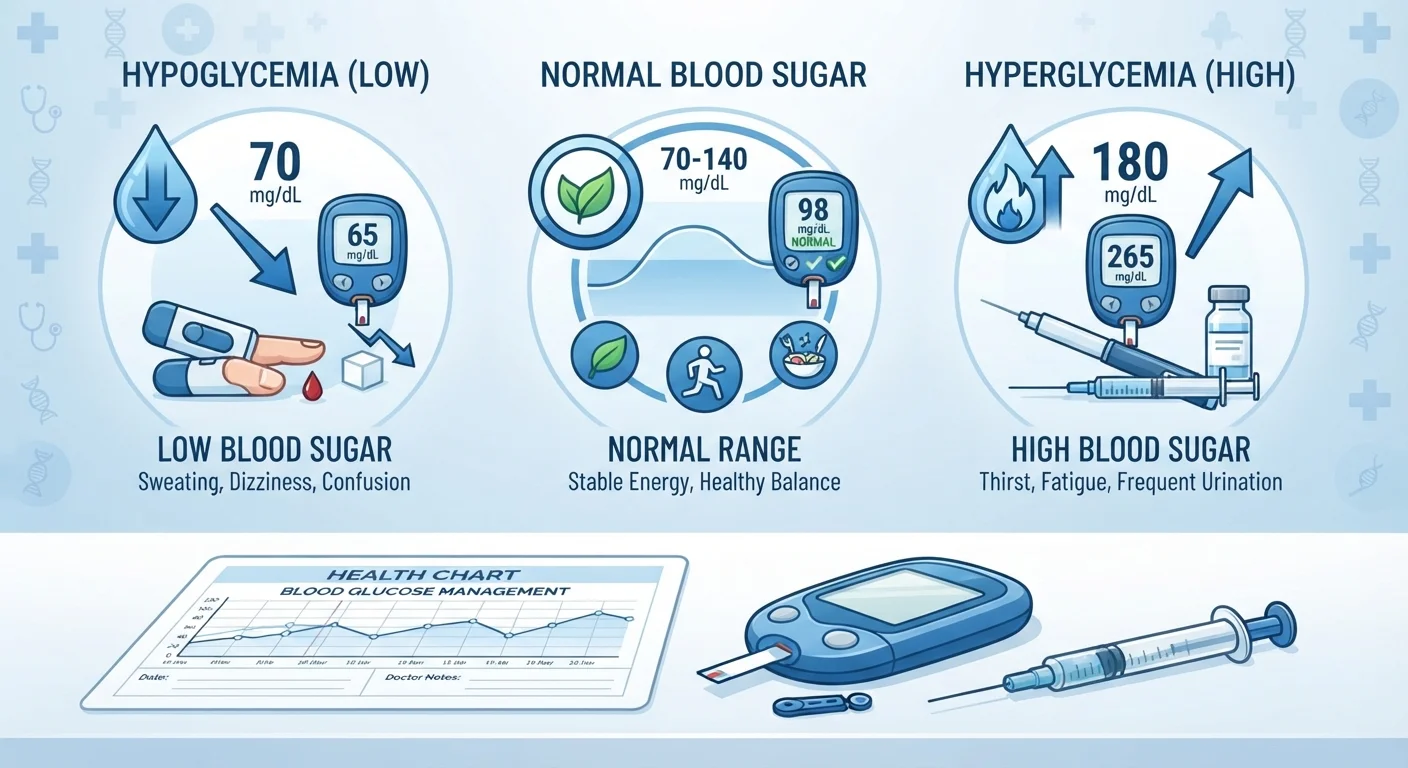
For prediabetes, clinical guidelines generally define fasting glucose in the range of 100 to 125 mg/dL or an HbA1c between 5.7% and 6.4%. Type 2 diabetes is typically diagnosed at fasting glucose of 126 mg/dL or above, or an HbA1c of 6.5% or higher, confirmed on a repeat test. A reference guide to blood sugar ranges and what they signal covers these thresholds in more detail.
Type 1 diabetes often presents more acutely, with symptoms appearing rapidly over days or weeks. Clinicians may also test for autoantibodies (proteins produced when the immune system attacks beta cells) and C-peptide levels (a marker of insulin production) to distinguish it from Type 2, particularly in adults where the presentation can be ambiguous.
96 million
U.S. adults with prediabetes
According to the CDC's National Diabetes Statistics Report, more than 1 in 3 U.S. adults have prediabetes, and most are unaware of it.
5-10%
Share of diabetes cases that are Type 1
The CDC estimates Type 1 accounts for approximately 5 to 10 percent of all diagnosed diabetes cases in the United States.
58%
Reduction in Type 2 progression with lifestyle intervention
The NIH Diabetes Prevention Program trial found that structured lifestyle changes reduced progression from prediabetes to Type 2 diabetes by 58 percent.
Management approaches and what differs between them
Type 1 diabetes requires external insulin, delivered by injection or an insulin pump, because the body produces essentially none. There is currently no dietary or lifestyle substitute for this. People with Type 1 monitor blood glucose closely and adjust insulin doses relative to meals, activity, and illness. Management has become more precise with continuous glucose monitors and automated insulin delivery systems, but the fundamental need for insulin does not change.
Type 2 diabetes management depends on where someone is in the condition's progression. Early stages may be addressed through structured changes to eating patterns, physical activity, and weight if that is clinically relevant. Oral medications, most commonly metformin, are frequently introduced alongside lifestyle work. As beta cell function declines, injectable medications or insulin may be added. The range of available treatments is broader than for Type 1, and the trajectory is more variable. Thinking errors that undermine blood sugar management over time addresses some common ways people inadvertently work against their own progress.
Prediabetes is often managed without medication initially. The landmark Diabetes Prevention Program trial, conducted by the U.S. National Institutes of Health, found that a structured lifestyle intervention reduced progression to Type 2 diabetes by approximately 58% in adults with prediabetes, compared with 31% for metformin alone. These findings have informed clinical practice in the U.S. and internationally. However, prediabetes is not a condition to dismiss; dismissing prediabetes as a borderline issue is itself a documented obstacle to timely action.
This article is for informational purposes only and is not medical advice. Consult a qualified healthcare provider for diagnosis, treatment, or any questions about your individual health.