

Key Takeaways
Cholesterol
Cholesterol is a waxy, fat-like substance found in every cell of the human body. It is not inherently harmful. The body needs cholesterol to build cell membranes, produce hormones, and make vitamin D. Most cholesterol in circulation is made by the liver; the rest comes from food.
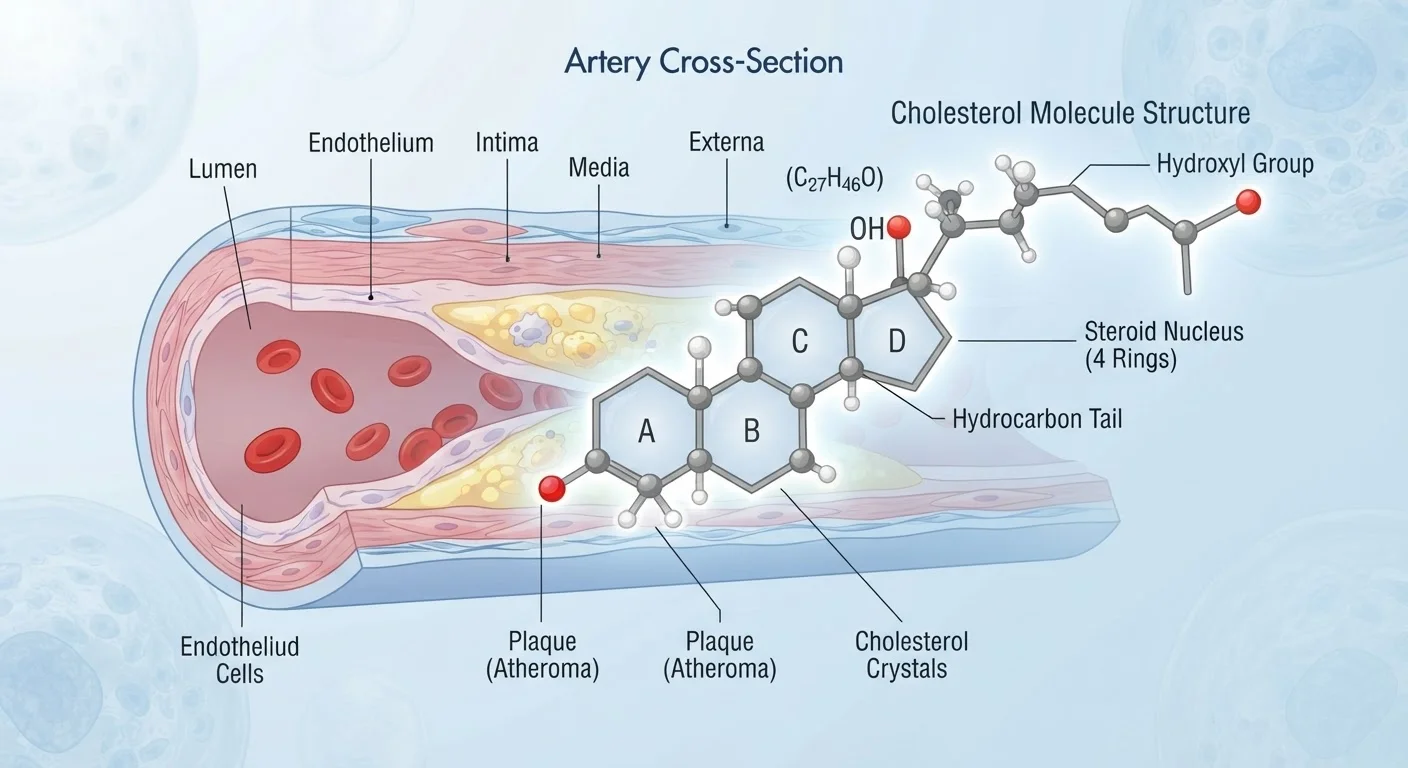
Cholesterol is a sterol, a type of lipid that cannot dissolve in water. It travels through the bloodstream packaged inside proteins called lipoproteins, most notably LDL and HDL.
What cholesterol actually is
Cholesterol belongs to a family of molecules called sterols, which are a subtype of lipid. Because it does not dissolve in water, it cannot travel freely through blood. Instead, the body packages it inside protein shells called lipoproteins, which allow it to circulate through the bloodstream.
Two lipoproteins receive the most clinical attention. LDL (low-density lipoprotein) moves cholesterol from the liver outward to cells across the body. HDL (high-density lipoprotein) moves cholesterol in the reverse direction, back to the liver for recycling or excretion. The ratio and absolute levels of these particles matter more to cardiovascular risk than a single total cholesterol number.
Triglycerides, another type of blood fat, often appear on the same lab report. They are chemically distinct from cholesterol but share the lipoprotein transport system and contribute to overall lipid risk assessment.
Why the body produces cholesterol at all
The body manufactures cholesterol because it is essential. Every cell membrane contains cholesterol, which controls how rigid or fluid the membrane is and regulates what passes in and out of the cell. Without adequate cholesterol, cells cannot maintain their structural integrity.
Cholesterol is also the starting material for several steroid hormones, including cortisol, estrogen, testosterone, and progesterone. The adrenal glands and gonads draw on circulating cholesterol to synthesize these hormones. Separately, the skin uses cholesterol to produce vitamin D when exposed to ultraviolet light, and the liver converts cholesterol into bile acids, which the digestive system uses to absorb dietary fats.
The liver is the central regulator of this entire system. It adjusts how much cholesterol it produces based on dietary intake and how much it clears from the blood based on the number of LDL receptors active on its surface. When this feedback system works properly, circulating cholesterol levels stay within a functional range.
70-80%
Cholesterol produced by the liver
The body manufactures the majority of its own cholesterol regardless of dietary intake, according to established physiology.
38%
U.S. adults with high total cholesterol
According to CDC data, a substantial portion of American adults have total cholesterol levels above the desirable threshold, many without knowing it.
4 types
Main lipoprotein classes carrying cholesterol
VLDL, IDL, LDL, and HDL each carry cholesterol at different stages of its circulation through the body, with distinct metabolic roles.
Where cholesterol comes from
The liver synthesizes roughly 70 to 80 percent of the cholesterol in circulation. The remaining 20 to 30 percent enters from food, specifically from animal products such as meat, dairy, and eggs. Plant foods do not contain cholesterol, though some contain plant sterols that can influence how much cholesterol the gut absorbs.
When dietary cholesterol intake increases, the liver typically compensates by producing less of its own. This feedback loop means that for many people, eating more dietary cholesterol does not proportionally raise blood cholesterol. Saturated and trans fats are more reliably linked to elevated LDL levels because they reduce LDL receptor activity in the liver, slowing how quickly the organ clears LDL from the blood. Diet's actual influence on cholesterol numbers is a topic worth examining in depth for anyone trying to make sense of food choices and lipid results.
Genetics also affect baseline levels. Familial hypercholesterolemia, a genetic condition affecting LDL receptor function, causes persistently high LDL levels regardless of diet and requires medical management.
How cholesterol relates to cardiovascular health
Elevated LDL cholesterol is associated with atherosclerosis, a process in which LDL particles accumulate in artery walls and contribute to plaque formation. Over time, plaque can narrow arteries or rupture, raising the risk of heart attack and stroke. However, cholesterol is one factor among several. Blood pressure, inflammation, blood sugar, and smoking all interact with cholesterol in shaping cardiovascular risk.
The connection between cholesterol and inflammation is an area of active research. LDL particles that become oxidized inside artery walls trigger an inflammatory response, which accelerates plaque development. This is why some researchers view LDL particle quality and oxidative stress as important alongside raw LDL quantity.
HDL's protective association is well-established in observational data, though clinical trials attempting to raise HDL artificially have produced mixed results. This suggests HDL function may matter as much as HDL level.
For a broader view of how cholesterol fits into heart health alongside other risk factors, see understanding cardiovascular health.
This article is for informational purposes only and is not medical advice. Speak with a qualified healthcare provider about your cholesterol levels, personal risk factors, and any decisions regarding testing or treatment.