
The Role of Diet in Cholesterol Levels: What the Research Actually Shows

Key Takeaways
Diet and cholesterol
Dietary choices influence blood cholesterol levels, but not always in the ways people expect. The type of fat you eat, the amount of soluble fiber in your diet, and how many refined carbohydrates you consume each affect different cholesterol fractions in different ways. Eating cholesterol-rich foods, such as eggs, has a smaller direct effect on most people's LDL than eating foods high in saturated fat.
The liver compensates for dietary cholesterol by adjusting its own production, a process called downregulation of endogenous synthesis. This feedback loop means dietary cholesterol is a weaker driver of LDL than saturated and trans fats for most individuals.
Why dietary fat matters more than dietary cholesterol
For decades, public health guidance focused on limiting eggs and shellfish to protect heart health. The concern was intuitive: foods high in cholesterol would raise cholesterol in the blood. Research since the 1990s has substantially revised this picture.
The liver produces roughly 75 to 80 percent of the cholesterol circulating in your blood. When you consume more cholesterol from food, the liver typically responds by producing less of its own and by reducing the number of receptors that clear LDL from the bloodstream. This regulatory mechanism blunts the impact of dietary cholesterol for most people. How the liver produces and regulates cholesterol explains this process in more detail.
Saturated fat, found in red meat, full-fat dairy, coconut oil, and palm oil, does not trigger the same compensatory response. It reduces LDL receptor activity without a matching reduction in hepatic cholesterol synthesis, which results in higher circulating LDL. Multiple large dietary trials and meta-analyses have confirmed this relationship. Replacing saturated fat with polyunsaturated fat consistently lowers LDL in controlled feeding studies.
Trans fats, produced by partial hydrogenation of vegetable oils and found historically in processed foods and margarine, have the worst lipid profile effect of any dietary fat type. They raise LDL and simultaneously lower HDL (high-density lipoprotein), the fraction associated with lower cardiovascular risk. Regulatory action has largely removed industrial trans fats from the US food supply, but small amounts occur naturally in some animal products.
Focus on fat type, not fat content alone
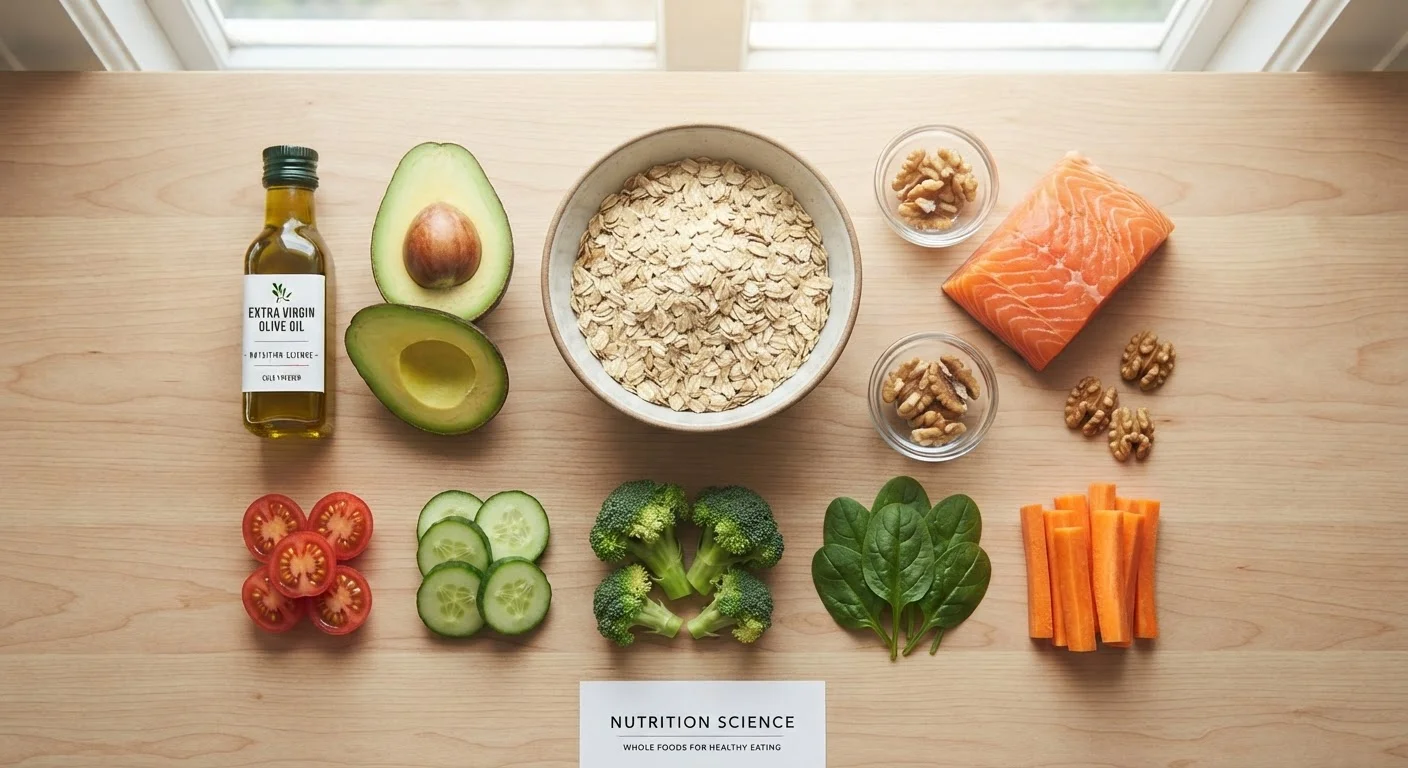
Choosing foods lower in saturated fat and higher in unsaturated fat, such as replacing butter with olive oil or choosing fish over fatty red meat, targets the dietary factor with the strongest evidence for LDL reduction. Simply reducing total fat without considering the type of replacement may not improve your lipid profile. Talk with your healthcare provider about what dietary pattern suits your individual health situation.
Soluble fiber, plant sterols, and their mechanisms
Soluble fiber dissolves in water and forms a viscous gel in the digestive tract. This gel binds bile acids, which are made from cholesterol, and carries them out of the body in stool. The liver then draws more cholesterol from the blood to synthesize replacement bile acids, which lowers circulating LDL. Oats, barley, legumes, apples, and psyllium husk are among the best-studied sources. Soluble fibre, plant sterols, and other dietary factors covers the full range of food compounds with cholesterol-relevant evidence.
Plant sterols and stanols are structurally similar to cholesterol and compete with it for absorption in the small intestine. At intakes of around two grams per day, they can lower LDL by roughly 8 to 10 percent in clinical studies. They occur naturally in vegetables, nuts, and grains in small quantities, and are added at higher concentrations to certain fortified foods.
10-30%
Potential LDL reduction from sustained dietary change
Clinical feeding studies suggest this range for people without strong genetic predispositions who make consistent dietary improvements.
8-10%
LDL reduction from 2 grams daily plant sterols
Multiple controlled trials have documented this effect at approximately 2 grams per day of plant sterols or stanols.
75-80%
Share of blood cholesterol produced by the liver
The liver manufactures the majority of circulating cholesterol regardless of dietary intake, which is why diet alone has limits as an intervention.
Refined carbohydrates, sugar, and triglycerides
The standard lipid panel measures not just LDL and HDL but also triglycerides, the primary form of fat stored in the body. Diet has a strong and direct effect on triglyceride levels. High intake of refined carbohydrates, sugar-sweetened beverages, and alcohol reliably raises triglycerides. The liver converts excess glucose and fructose into fatty acids and packages them as triglyceride-rich particles.
Elevated triglycerides are associated with lower HDL levels and with increased concentrations of small, dense LDL particles, a form that some research associates with greater cardiovascular risk than larger LDL particles. Interpreting a lipid panel explains why particle size and ratios add context beyond the standard numbers.
People who shift from high saturated fat intake to high refined carbohydrate intake may see LDL fall but triglycerides rise and HDL fall. Whether this trade-off improves overall cardiovascular risk is contested in the literature and depends on individual metabolic factors.
Individual variation and the limits of dietary intervention
Population-level data show consistent patterns, but individual responses to the same dietary change can differ substantially. Genetic factors account for much of this variation. When high cholesterol has nothing to do with diet or lifestyle describes how inherited conditions like familial hypercholesterolemia can drive LDL to high levels regardless of diet.
For people without a strong genetic predisposition, sustained dietary changes can produce LDL reductions of 10 to 30 percent in clinical settings, though real-world results are often more modest. Diet also interacts with other factors: body weight, physical activity, liver function, and medications all affect how cholesterol responds to food changes. Understanding cardiovascular health places cholesterol within this broader risk picture.
Anyone considering significant dietary changes to address cholesterol levels should work with a qualified healthcare provider to set realistic goals and monitor results over time.
This article is for informational purposes only and is not medical advice. Consult a qualified healthcare professional before making changes to your diet or treatment plan, especially if you have a diagnosed condition or take medications.