
Understanding Cardiovascular Health: How Cholesterol Fits the Bigger Picture

Key Takeaways
Start here
What cholesterol actually is
Next
Reading a lipid panel
Build on it
How cholesterol interacts with other cardiovascular risk factors
Apply it
Lifestyle factors that influence cholesterol
Take action
When to involve a healthcare professional
What cholesterol actually is
Cholesterol is a waxy, fat-like substance the body makes in the liver and obtains from certain foods. Every cell membrane contains it, and the body uses it to produce vitamin D, bile acids that aid digestion, and hormones including estrogen and testosterone. Without cholesterol, normal physiology cannot function.
Because cholesterol does not dissolve in blood, it travels inside protein-coated particles called lipoproteins. Two of these particles appear on every standard lipid panel: low-density lipoprotein (LDL) and high-density lipoprotein (HDL). LDL carries cholesterol from the liver to tissues throughout the body. HDL picks up excess cholesterol from those tissues and returns it to the liver for processing or removal. The liver's role in lipid metabolism means that liver health directly shapes the cholesterol numbers that appear on a blood test.
LDL cholesterol
Low-density lipoprotein: a particle that carries cholesterol from the liver to body tissues. High levels are associated with greater cardiovascular risk.
HDL cholesterol
High-density lipoprotein: a particle that transports excess cholesterol back to the liver for removal. Higher levels are generally considered protective.
Lipid panel
A blood test that measures total cholesterol, LDL, HDL, and triglycerides to help assess cardiovascular risk.
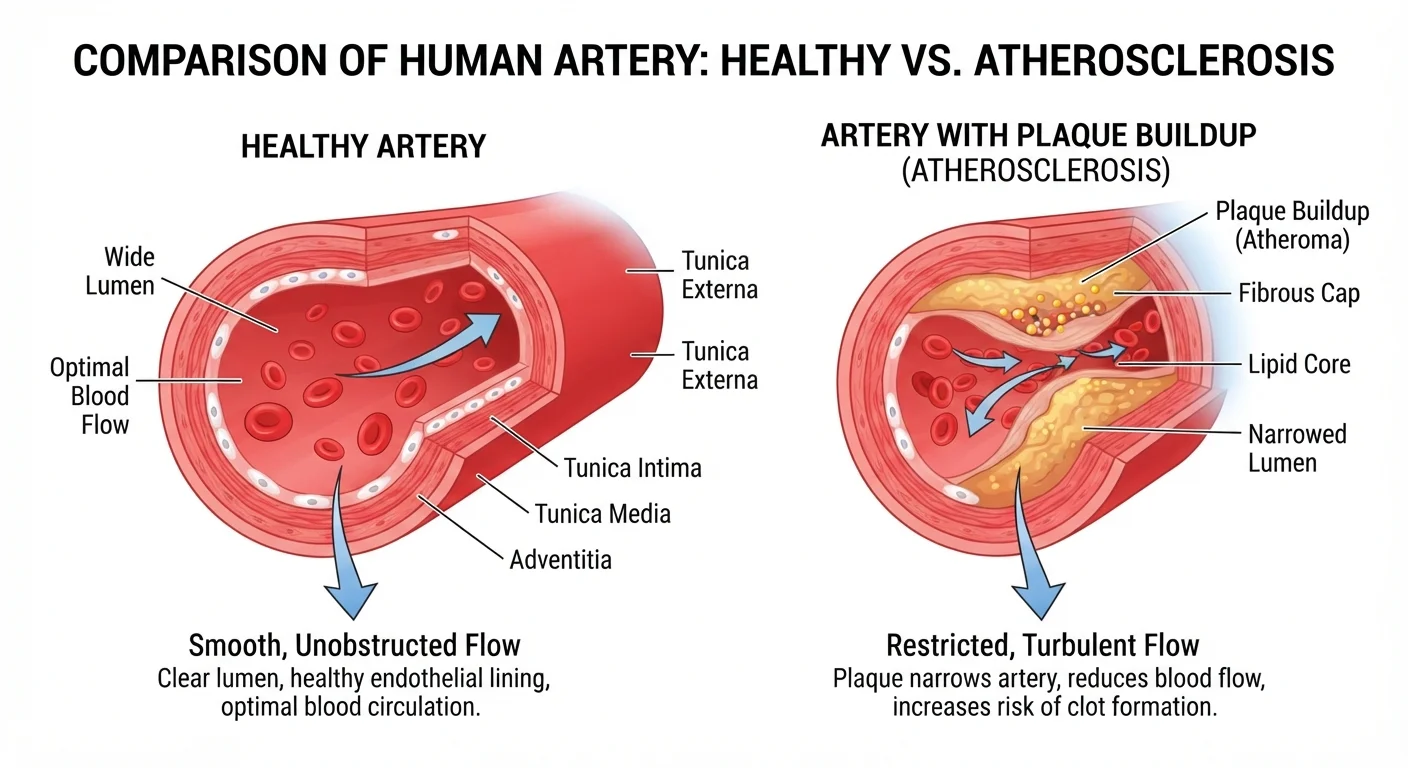
Atherosclerosis
A condition in which plaque, composed partly of cholesterol and other materials, builds up inside artery walls and can restrict blood flow over time.
Triglycerides
A type of fat found in the bloodstream that provides energy. Elevated levels are an independent cardiovascular risk factor.
Lipoprotein
A particle made of protein and fat that carries cholesterol and triglycerides through the blood, since these substances do not dissolve in water.
Reading a lipid panel
A standard lipid panel measures total cholesterol, LDL cholesterol, HDL cholesterol, and triglycerides. Each number provides different information, and clinicians read them together rather than in isolation.
LDL is often called the atherogenic particle because, under the right conditions, it can deposit inside artery walls and contribute to plaque. HDL is generally considered protective because it facilitates cholesterol removal from arteries. Low HDL combined with high LDL is a more concerning pattern than either value alone.
Triglycerides are a separate blood fat that also appears on the panel. They behave differently from cholesterol and carry their own implications for cardiovascular risk. The relationship between triglycerides and cholesterol is worth understanding when you review your results with a clinician.
No single number constitutes a diagnosis. Risk calculators that clinicians use combine lipid values with age, sex, blood pressure, smoking status, and diabetes history to estimate a person's overall cardiovascular risk over ten years.
How cholesterol interacts with other cardiovascular risk factors
Cholesterol does not act alone. The conditions surrounding LDL particles in the bloodstream determine how much harm they cause.
Chronic inflammation is one of the most studied amplifiers of cholesterol-related risk. Inflamed arterial walls are more permeable to LDL particles, and once LDL accumulates inside the wall, immune cells respond in ways that accelerate plaque formation. The connection between cholesterol and inflammation is an active area of cardiovascular research.
High blood pressure damages the inner lining of arteries, making it easier for LDL to penetrate. Blood sugar imbalances associated with insulin resistance and type 2 diabetes alter LDL particle size and oxidation, increasing their tendency to deposit in arterial walls. Smoking impairs HDL function and accelerates arterial damage. Hormonal shifts, particularly changes in estrogen levels, can alter the LDL-to-HDL ratio, which is one reason cardiovascular risk patterns differ between men and women across the lifespan. The broader context of hormonal health intersects with cardiovascular physiology in ways clinicians consider when assessing individual risk.
Think in risk profiles, not single numbers
Cardiovascular guidelines in the United States use tools that combine cholesterol values with blood pressure, age, smoking status, and diabetes history into an overall risk estimate. A moderately elevated LDL in an otherwise healthy person carries a different meaning than the same LDL in someone who also smokes and has high blood pressure. Ask your clinician how your numbers fit into your overall risk profile rather than focusing on any one value.
Lifestyle factors that influence cholesterol
Several modifiable behaviors consistently show up in cardiovascular research as relevant to lipid levels.
Dietary fat composition has a well-documented effect. Saturated fats, abundant in fatty meats and full-fat dairy, tend to raise LDL. Unsaturated fats, found in olive oil, nuts, and fatty fish, are associated with more favorable lipid profiles. The difference between saturated and unsaturated fats matters more than reducing dietary cholesterol itself, which has a smaller effect than once believed. Soluble fiber from oats, legumes, and certain fruits can modestly lower LDL by binding bile acids in the gut. The role of soluble fiber and plant sterols in cholesterol management is supported by consistent evidence.
Regular physical activity raises HDL and improves the body's handling of triglycerides. Body weight matters too: excess visceral fat is associated with higher LDL, lower HDL, and elevated triglycerides. For a structured look at how eating patterns affect lipid numbers, the research on diet and cholesterol provides a clear-eyed summary of what the evidence actually shows.
When to involve a healthcare professional
Lipid panels should be interpreted by a qualified clinician who can factor in your personal and family medical history, current medications, and other cardiovascular risk markers. Self-interpreting a single number without that context often leads to unnecessary anxiety or false reassurance.
Adults without known risk factors are generally advised to have a lipid panel checked every four to six years, though guidelines vary by age and individual history. Those with a family history of early heart disease, diabetes, hypertension, or prior cardiovascular events are typically assessed more frequently.
Treatment decisions, whether lifestyle-based or medication-based, belong to the conversation between you and your clinician. Statins and other lipid-lowering therapies have clear evidence bases and clear eligibility criteria; they are neither appropriate for everyone with an elevated LDL nor inappropriate for everyone who would prefer to avoid them. That determination requires a professional evaluation.
This article is for informational purposes only and is not medical advice. Always consult a qualified healthcare professional before making decisions about your health, medications, or treatment.