
Cholesterol and Inflammation: The Connection That Shapes Cardiovascular Risk

Key Takeaways
Cholesterol-driven inflammation
Cholesterol-driven inflammation refers to the immune response that occurs when low-density lipoprotein (LDL) particles become trapped in arterial walls and are chemically altered. The body treats these modified particles as foreign, triggering an inflammatory response that can damage blood vessels over time. This process is central to how atherosclerosis, the buildup of plaque inside arteries, develops and progresses.
Oxidized LDL particles activate macrophages to form foam cells, releasing pro-inflammatory cytokines such as interleukin-6 and tumor necrosis factor-alpha that sustain vascular inflammation even when LDL levels appear modestly elevated.
Why cholesterol alone does not tell the whole story
Standard lipid panels measure total cholesterol, LDL, HDL, and triglycerides. These numbers are useful, but they do not fully explain who develops arterial disease and who does not. A substantial proportion of people who experience heart attacks have LDL values that fall within conventional target ranges. What the lipid panel misses is the inflammatory process that determines whether cholesterol deposits in artery walls become dangerous or remain stable.
The cholesterol-inflammation connection has been studied extensively since the 1970s and 1980s, when researchers began observing immune cells inside arterial plaques. Those findings shifted the understanding of atherosclerosis from a simple cholesterol-storage problem to a chronic inflammatory disease of the vessel wall. How cholesterol fits the bigger picture of cardiovascular health covers the broader context of these interacting risk factors.
How LDL triggers an immune response inside arteries
LDL particles carry cholesterol through the bloodstream. When blood pressure is elevated or the inner arterial lining is damaged, LDL particles can penetrate beneath that lining into the subendothelial space. Once there, they are exposed to reactive oxygen species and become oxidized.
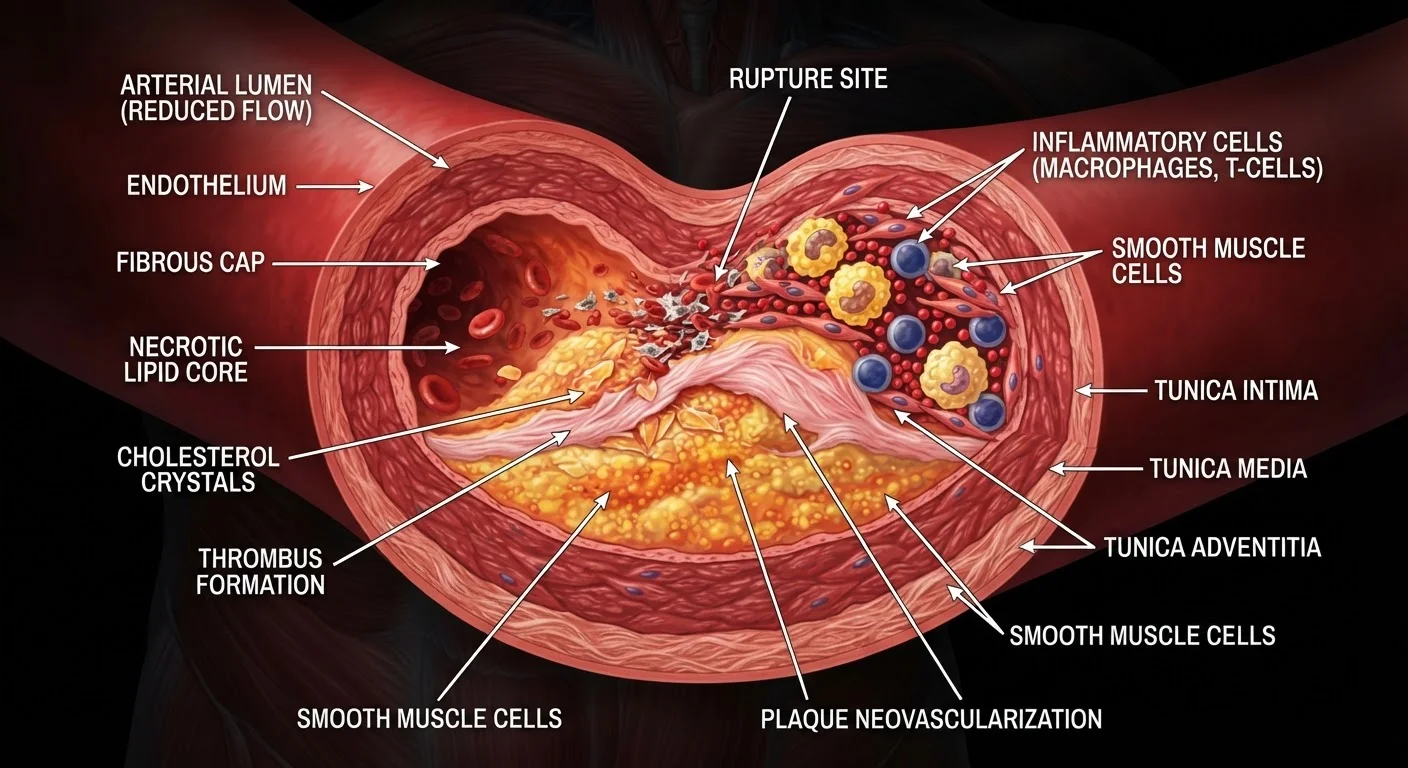
The immune system does not recognize oxidized LDL as normal tissue. Macrophages, a type of white blood cell, move into the artery wall and attempt to engulf the oxidized particles. As macrophages absorb more and more oxidized LDL, they transform into foam cells, named for their foamy appearance under a microscope. Foam cells accumulate into fatty streaks, the earliest visible precursor to plaque.
Throughout this process, the macrophages release inflammatory signaling molecules called cytokines. These signals recruit more immune cells, increase local inflammation, and promote the growth of a fibrous cap over the developing plaque. If that cap becomes thin and unstable due to sustained inflammation, it can rupture, triggering the clot formation that causes most heart attacks and many strokes.
50%
Heart attack patients with normal LDL
Research published in the American Heart Journal found that approximately half of patients hospitalized for coronary artery disease had LDL levels below standard clinical thresholds, pointing to risk factors beyond LDL alone.
44%
Reduction in cardiovascular events with statin in elevated hs-CRP group
The JUPITER trial (2008) reported a 44% reduction in major cardiovascular events among participants with normal LDL but elevated hs-CRP who were assigned to statin therapy versus placebo.
3x
Increased risk with high hs-CRP and high LDL together
Combined elevation of both LDL and hs-CRP carries roughly three times the cardiovascular event risk compared to having neither elevated, according to analyses from the Women's Health Study.
Measuring inflammation: what hs-CRP tells clinicians
High-sensitivity C-reactive protein (hs-CRP) is a protein produced by the liver in response to systemic inflammation. Blood levels rise when inflammation is present anywhere in the body, including inside artery walls. Clinicians use hs-CRP alongside standard lipid testing to get a fuller picture of cardiovascular risk.
The JUPITER trial, a large randomized controlled study published in 2008, found that people with normal LDL levels but elevated hs-CRP had significantly fewer heart attacks and strokes when treated with a statin compared to those who received a placebo. This finding reinforced the clinical relevance of inflammation as a cardiovascular risk factor independent of LDL alone.
Other inflammatory biomarkers, including interleukin-6 and fibrinogen, are also under active investigation, though hs-CRP remains the most widely used in clinical settings. No single marker captures the full complexity of vascular inflammation, and results are always interpreted in the context of a person's overall risk profile.
Shared drivers: what raises both cholesterol and inflammation
Several lifestyle and metabolic factors raise LDL cholesterol and systemic inflammation at the same time. Cigarette smoking oxidizes LDL particles directly and damages arterial linings, creating conditions favorable to plaque formation. Obesity, particularly excess visceral fat around the abdomen, produces pro-inflammatory cytokines that circulate throughout the body. Insulin resistance and type 2 diabetes amplify both lipid abnormalities and inflammatory signaling.
Diet also operates on both pathways simultaneously. Diets high in trans fats and refined sugars raise LDL while promoting inflammatory cytokine production. Conversely, diets rich in omega-3 fatty acids, soluble fiber, and plant-based foods are associated with lower LDL and reduced inflammatory markers. Dietary compounds linked to cholesterol reduction describes specific food components with meaningful effects on lipid levels. The gut microbiome also connects these two systems: microbial imbalance can generate inflammatory signals that reach the circulation, as discussed in gut health and chronic inflammation.
Physical activity affects both pathways
Regular moderate-intensity aerobic exercise is associated with lower LDL, higher HDL, and reduced circulating inflammatory markers including hs-CRP. The anti-inflammatory effect of exercise appears to operate partly through reducing visceral fat and improving insulin sensitivity. Talk with your healthcare provider about what activity level is appropriate for your current health status.
What this means for understanding your risk
Cardiovascular risk assessment is most accurate when it accounts for both lipid levels and inflammatory status. Someone with borderline LDL and elevated hs-CRP may warrant closer attention than someone with similar LDL and low inflammation. Clinicians weigh these markers together with blood pressure, blood glucose, smoking history, family history, and age when calculating overall risk.
Lifestyle factors that address inflammation, such as regular physical activity, a diet low in ultra-processed foods, and not smoking, overlap substantially with factors that improve lipid profiles. Addressing one tends to improve the other. For a grounded look at how specific fats in the diet affect LDL and HDL differently, the comparison of saturated and unsaturated fats provides useful context.
This article is for informational purposes only and is not medical advice. Consult a qualified healthcare professional before making any changes to your health management plan.