

| Causative organism | Dermatophyte fungi (Trichophyton, Microsporum, Epidermophyton species) |
| Clinical name: ringworm | Tinea corporis |
| Clinical name: athlete's foot | Tinea pedis |
| Clinical name: jock itch | Tinea cruris |
| Primary diagnostic feature | Location on the body combined with rash shape and border characteristics |
| Common transmission routes | Direct skin contact, shared surfaces, contaminated towels or clothing |
What these conditions share and why they get confused
Ringworm, athlete's foot, and jock itch are three of the most common superficial fungal infections in adults. All three are caused by dermatophytes, a group of fungi that digest keratin, the structural protein in skin, hair, and nails. Because they share the same biological origin, they often produce overlapping symptoms: redness, itching, and scaling. Location on the body is the primary feature that distinguishes them.
The clinical names follow a consistent Latin naming system. Ringworm of the body is tinea corporis, athlete's foot is tinea pedis, and jock itch is tinea cruris. For a broader look at how these infections relate to each other, see how tinea infections are classified and spread.
| Causative organism | Dermatophyte fungi (Trichophyton, Microsporum, Epidermophyton species) |
| Clinical name: ringworm | Tinea corporis |
| Clinical name: athlete's foot | Tinea pedis |
| Clinical name: jock itch | Tinea cruris |
| Primary diagnostic feature | Location on the body combined with rash shape and border characteristics |
| Common transmission routes | Direct skin contact, shared surfaces, contaminated towels or clothing |
Ringworm: what it looks like and where it appears
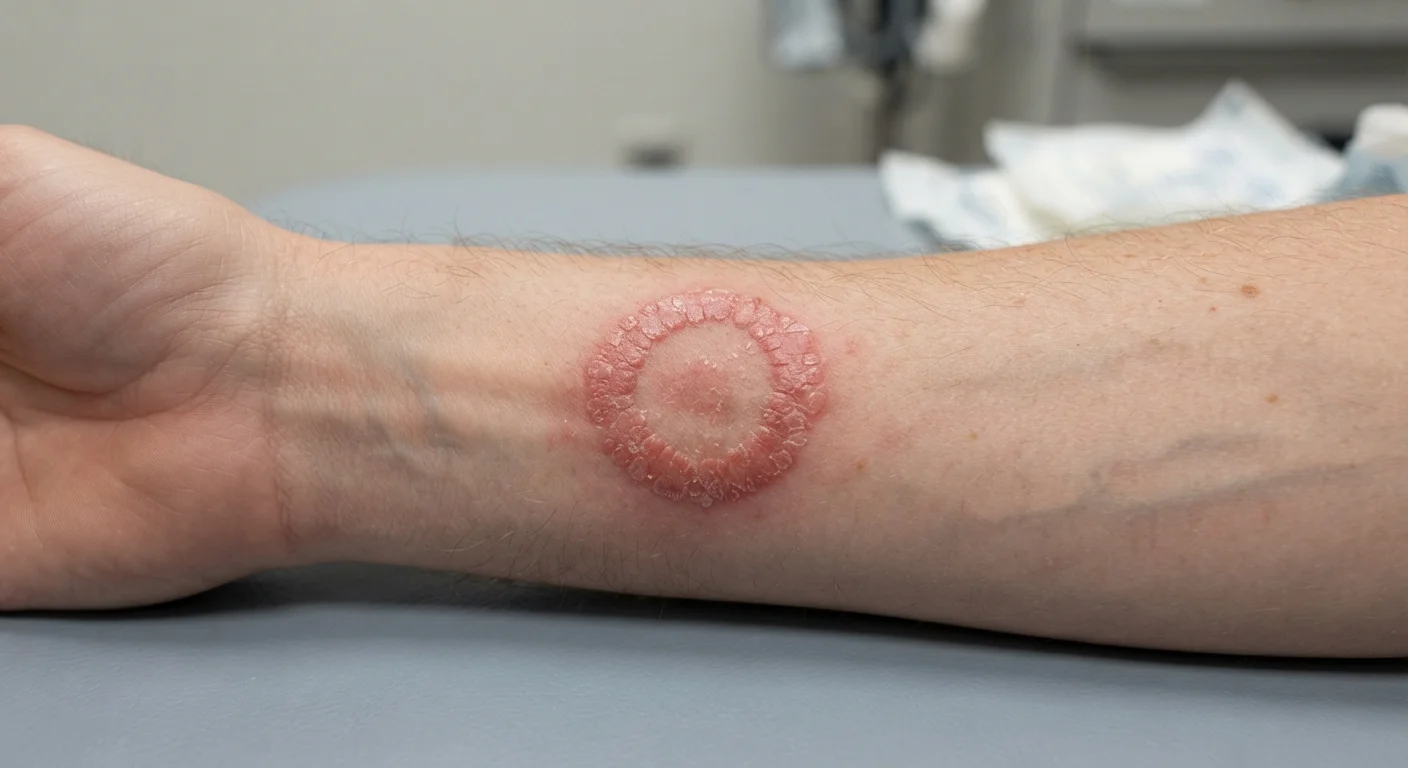
Despite the name, ringworm involves no worm. The label comes from the shape the infection typically produces on the skin: a circular or oval patch with a raised, red, scaly border and a clearer center. The border can blister or develop small pustules. As the infection spreads outward, the central area may begin to heal, creating the ring appearance.
Ringworm can occur on almost any skin surface except the scalp, groin, and feet, which have their own clinical designations. Common sites include the trunk, arms, face, and neck. Multiple rings can appear simultaneously, and in people with compromised immune function, they may merge into large, irregular patches. Direct contact with an infected person, animal, or contaminated surface transmits the fungi. Children, athletes in contact sports, and people who work closely with animals face higher baseline exposure. For a body-site reference covering ringworm alongside other fungal conditions, the body-map fungal reference provides a useful overview.
Athlete's foot: symptoms, patterns, and spread
Athlete's foot most commonly begins between the toes, particularly the fourth and fifth interdigital space. The skin becomes white, soft, and macerated, often with cracking, peeling, and an unpleasant odor. Without intervention, the infection can spread across the sole of the foot in what clinicians call the moccasin pattern: a dry, scaly thickening covering the heel and sides of the foot. A vesicular pattern, in which fluid-filled blisters appear on the sole, is a less common but more acutely uncomfortable presentation.
Warm, damp environments inside footwear promote fungal growth, which is why the condition is prevalent among people who sweat heavily or wear occlusive shoes. Shared shower floors, pool decks, and locker room surfaces are common transmission sites. Scratching the feet and then touching other body areas can spread the infection. If tinea pedis is left untreated, dermatophytes can track into the toenails, resulting in onychomycosis, a harder-to-treat nail infection. For people who exercise regularly, evidence-based prevention strategies for athlete's foot cover the most practical protective steps.
Jock itch: identifying the groin rash
Jock itch produces a red, scaly, sometimes ring-edged rash in the groin folds. The inner thighs, perineum, and buttocks can be affected, but the scrotum is usually spared in tinea cruris, which is one feature that helps distinguish it from other groin rashes such as candidiasis (yeast infection), where the scrotum is more often involved.
The rash typically has a well-defined, raised border and causes significant itching and burning. Heat, sweat, and friction in skin folds create conditions where dermatophytes thrive. The infection is more common in men, but women can develop it. Wearing tight clothing, being overweight, or having obesity increases friction in the groin area and raises the likelihood of infection. People with athlete's foot may transfer fungi from their feet to the groin through towels or clothing. Certain chronic health conditions also change how susceptible a person is to fungal infections; conditions that raise fungal infection risk explains these connections in detail.
Dermatophyte
A category of fungi that requires keratin as a nutrient source and infects the outer layers of skin, hair, and nails. Most superficial fungal skin infections in humans are caused by dermatophytes.
Tinea
The clinical term for a group of superficial fungal infections caused by dermatophytes. Each type is named by body location: tinea pedis (feet), tinea cruris (groin), tinea corporis (body).
Onychomycosis
A fungal infection of the nail plate, most often of the toenails. It causes thickening, discoloration, and brittleness, and typically requires oral antifungal treatment.
Macerated skin
Skin that has softened and broken down from prolonged moisture exposure. In athlete's foot, maceration between the toes is often the earliest visible sign of infection.
Moccasin pattern
A presentation of athlete's foot in which dry, fine scaling covers the entire sole, heel, and sides of the foot, resembling the coverage area of a moccasin shoe.
Keratin
A fibrous structural protein that makes up the outer layer of skin, as well as hair and nails. Dermatophytes produce enzymes that break keratin down for growth.
When to seek professional evaluation
Many superficial fungal infections respond to over-the-counter topical antifungal treatments, but some cases require a clinician's assessment. A rash that does not improve after two to four weeks of appropriate topical treatment, one that spreads rapidly, or one accompanied by pain, swelling, or fever warrants prompt evaluation. Rashes in the groin and on the feet can also mimic contact dermatitis, psoriasis, or bacterial infection, all of which need different treatments.
People managing diabetes, taking immunosuppressive medications, or living with other conditions that affect immune response should consult a healthcare professional before self-treating any skin rash. Nail involvement generally requires prescription-strength oral antifungal therapy rather than topical agents alone. The complete overview of fungal skin health covers when professional guidance is appropriate across a broader range of scenarios. Consistently applying the right hygiene practices also reduces recurrence; hygiene habits that reduce fungal infection risk outlines what dermatologists generally recommend.
This article is for informational purposes only and is not medical advice. Consult a qualified healthcare professional for personal health concerns, diagnosis, or treatment decisions.