
Understanding Tinea: The Family of Fungal Infections Behind Many Skin Rashes

Key Takeaways
Start here
What tinea actually means
Next
The fungi responsible
Then
Common tinea infections by location
After that
How tinea spreads
When you're ready
When to see a healthcare provider
What tinea actually means
Tinea is a Latin word historically used for gnawing insects, applied centuries ago to skin conditions thought to resemble the damage a moth makes in cloth. Today it is the medical umbrella term for superficial fungal infections that affect keratinized tissue: the outer layer of skin, hair, and nails. The organisms involved do not penetrate deep into the body in most cases, but they can cause persistent, uncomfortable symptoms and spread readily if untreated.
The name changes depending on where the infection appears. Tinea capitis affects the scalp, tinea corporis affects the trunk or limbs, tinea pedis affects the feet, tinea cruris affects the groin, and tinea unguium (more commonly called onychomycosis) affects the nails. Despite these different labels, all of these conditions share the same biological cause and the same basic mechanism of infection. Understanding this shared origin helps explain why similar habits and environments tend to produce recurring problems across multiple body sites.
For a broader look at how fungal organisms differ from bacteria and why they colonize the skin the way they do, see this introduction to fungal infections.
Tinea
The medical term for superficial fungal infections caused by dermatophytes, affecting skin, hair, or nails. The specific name changes based on which body site is infected.
Dermatophyte
A group of fungi that feed on keratin, the protein found in skin, hair, and nails. They are the organisms responsible for all tinea infections.
Keratin
A tough structural protein that makes up the outer layer of skin, hair shafts, and nails. Dermatophytes digest keratin as their food source.
Onychomycosis
The clinical term for fungal infection of the nails, also called tinea unguium. It causes thickening, discoloration, and brittleness of the nail plate.
Anthropophilic
Describes dermatophyte species that primarily infect humans and spread person to person, as opposed to those that originate in animals or soil.
Kerion
A severe, inflamed swelling of the scalp that can develop with tinea capitis. It is an immune response to the fungal infection and usually requires prompt medical treatment.
The fungi responsible
Tinea infections are caused by dermatophytes, a group of fungi with the unusual ability to digest keratin, the structural protein that makes up skin, hair, and nails. Three genera account for almost all human cases: Trichophyton, Microsporum, and Epidermophyton. Within these genera, different species tend to prefer different hosts or body sites, which partially explains the varied clinical pictures that tinea presents.
Dermatophytes are classified by their preferred habitat. Anthropophilic species circulate primarily between humans. Zoophilic species originate in animals and can pass to people through contact. Geophilic species live in soil and occasionally infect humans or animals. Knowing which type is involved can matter clinically because zoophilic and geophilic infections sometimes trigger a more intense inflammatory response than human-to-human transmission does.
Tinea versicolor, despite its name, is not caused by a dermatophyte. It comes from Malassezia, a yeast naturally present on most adult skin. It is worth mentioning here specifically because its name leads many readers to group it with dermatophyte tinea infections, but the two are biologically distinct.
Common tinea infections by location
Location shapes both appearance and treatment, so the site of infection is the starting point for any clinical assessment.
Scalp (tinea capitis)
Tinea capitis occurs most often in children. It can produce scaly patches, broken hairs, or areas of hair loss, sometimes accompanied by inflamed, boggy swelling called a kerion. Because the fungus infects the hair shaft itself, topical treatments generally cannot reach it effectively, and oral antifungal therapy is typically required. A dermatologist or pediatrician should evaluate suspected scalp ringworm.
Body and face (tinea corporis and tinea faciei)
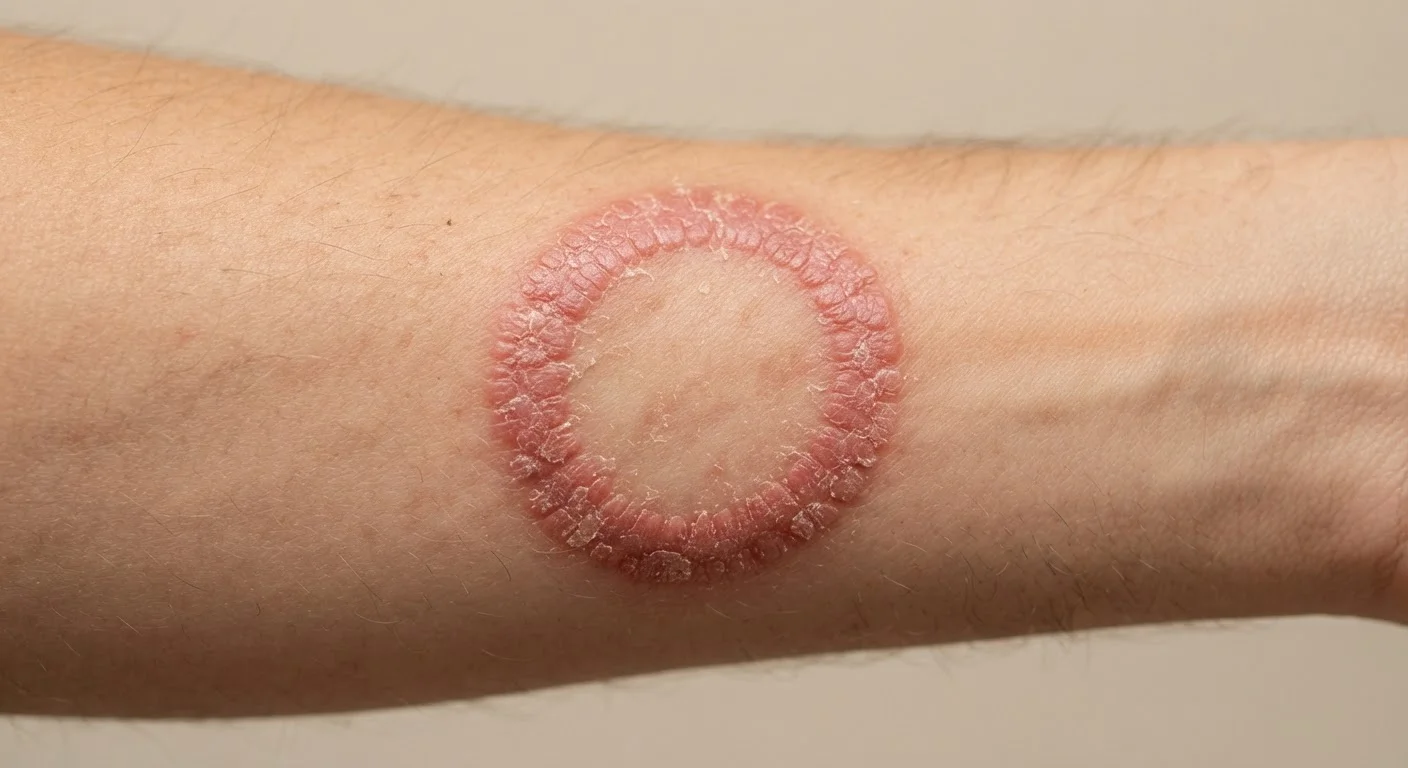
This is the form most people picture when they hear "ringworm": a circular, scaly plaque with a raised border and clearer center. On the face, the ring shape is often less distinct. These infections usually respond to topical antifungal agents when caught early.
Groin (tinea cruris)
Known informally as jock itch, tinea cruris affects the inner thighs, groin folds, and sometimes the buttocks. It tends to be itchy and red, often with a defined, slightly raised edge. Warmth and moisture accelerate its spread, and it is more common in people who sweat heavily or wear tight clothing.
Feet (tinea pedis)
Athlete's foot is the most widespread tinea infection. It typically starts between the toes, producing soft, white, peeling skin, and can spread to the soles or sides of the foot. Chronic or recurrent tinea pedis is also a common gateway to nail infection.
Nails (tinea unguium/onychomycosis)
Nail fungus causes thickening, discoloration, and crumbling of the nail plate, most often affecting toenails. It is the most treatment-resistant form of tinea and usually requires oral antifungal therapy over several months. For a full body-site reference, this body-map guide covers each location in detail.
How tinea spreads
Dermatophytes spread through direct contact with infected skin or with surfaces and objects that carry shed skin cells. Shared towels, gym equipment, locker room floors, and communal showers are well-recognized sources. Household transmission is common when one person has an active infection and items like bath mats or bedding are shared without regular washing.
Animal contact is a significant route for scalp and body infections, particularly from cats and dogs. Children who handle farm animals or soil are occasionally exposed to geophilic species. Fungi shed from infected skin can survive on surfaces for extended periods under the right conditions of warmth and humidity, which is part of why gyms, pools, and changing rooms are high-risk environments.
Moisture is a consistent factor across all transmission routes. Skin that stays wet or sweaty provides better conditions for dermatophyte growth, which is why feet and groin are frequent sites. Small breaks in the skin barrier, from cuts, abrasion, or eczema, make entry easier. Immune suppression from illness, medication, or other health conditions also increases susceptibility. A broader overview of fungal skin health examines these risk factors in more depth.
Reduce moisture to reduce risk
Keeping skin dry is one of the most practical ways to limit dermatophyte growth. After bathing or exercise, dry skin thoroughly, especially between the toes and in skin folds. Moisture-wicking socks and breathable footwear also help by reducing the warm, damp conditions that dermatophytes prefer.
When to see a healthcare provider
Many mild tinea infections on the body or feet resolve with over-the-counter topical antifungals when applied consistently for the full recommended duration. However, several situations call for professional evaluation rather than self-treatment.
Scalp infections in children should always be assessed by a clinician because they require oral treatment and sometimes indicate spread within a household or school setting. Nail infections are rarely cleared by topical therapy alone and need a confirmed diagnosis before oral treatment is started. Any rash that does not improve after two weeks of appropriate topical treatment, or one that spreads, becomes painful, or develops open sores, warrants a clinical visit.
People with diabetes, immune-compromising conditions, or those taking immunosuppressant medications face higher risk of complicated or extensive infections and should seek professional guidance early rather than waiting to see if symptoms resolve. The lymphatic system and overall immune function directly affect how the body responds to fungal exposure, and pre-existing health factors can change what is appropriate care significantly.
A healthcare provider can confirm the diagnosis, which matters because several other skin conditions, including psoriasis, eczema, and contact dermatitis, can look similar to tinea. Treating the wrong condition delays resolution and may worsen symptoms. For information on the treatment options a provider might discuss, see antifungal treatments: topical versus oral approaches.
This article is for informational purposes only and is not medical advice. Consult a qualified healthcare provider for diagnosis, treatment, or questions about your personal health.