

Key Takeaways
Supported by small but positive clinical trials
Multiple randomized controlled trials show measurable hair density gains when microneedling is combined with topical minoxidil, with better outcomes than minoxidil alone in several studies.
May improve topical treatment absorption
Micro-channels created by needles temporarily increase skin permeability, which can allow topical agents to reach the dermis more effectively than application to intact skin alone.
Stimulates natural growth factor release
The controlled injury response prompts the release of PDGF, VEGF, and related proteins that support blood flow and follicle signaling without introducing foreign substances.
Accessible at-home options exist for shallow depths
Rollers with needle lengths under 0.5 mm are widely available and considered lower-risk for home use, making the technique more accessible than clinic-only procedures.
Minimal systemic side effects
Unlike oral medications used for hair loss, microneedling does not circulate through the body, so systemic side effects are not a primary concern when the procedure is performed correctly.
Evidence base remains small and short-term
Most positive trials involve fewer than 60 participants and follow-up periods of 12 weeks or less, which is insufficient to confirm long-term safety or sustained efficacy.
Risk of infection if technique or hygiene lapses
Puncturing the scalp skin creates an entry point for bacteria and fungi. Dirty devices, broken technique, or pre-existing scalp conditions can turn a minor intervention into a significant skin infection.
Can worsen inflammatory scalp conditions
People with active seborrheic dermatitis, psoriasis, or folliculitis may experience flares if microneedling is applied to already-irritated skin, since mechanical trauma adds to existing inflammation.
Results depend heavily on hair loss cause
Evidence is strongest for androgenetic alopecia; the technique has little clinical support for scarring alopecias, where follicle replacement is not possible, and may be contraindicated in those cases.
Inconsistent at-home technique limits outcomes
Pressure, needle depth, and coverage pattern all affect results, and self-application makes consistent, even treatment across the scalp difficult to achieve reliably.
Device quality varies widely
Consumer microneedling devices are not uniformly regulated for needle sharpness or sterility, meaning cheaper options may cause more trauma than intended while delivering less controlled depth.
Our Verdict
Scalp microneedling has a growing body of evidence behind it, but that evidence is still limited in scale and duration. It works best as a complement to established treatments rather than a standalone solution, and only when the underlying cause of hair loss is properly understood first.
Adults with androgenetic alopecia or early diffuse thinning who have already consulted a dermatologist and want to explore adjunct options alongside proven therapies.
How scalp microneedling is supposed to work
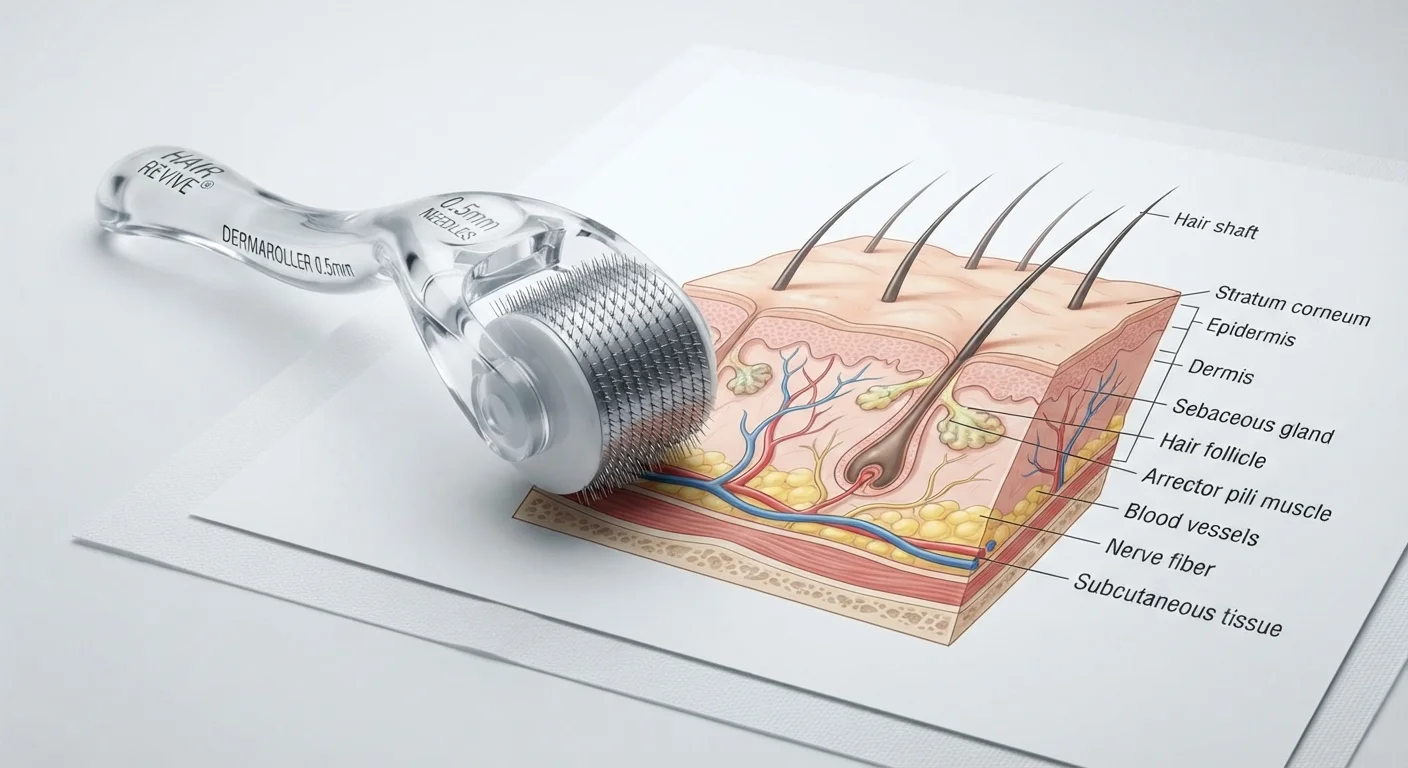
Microneedling uses a roller or stamp device fitted with rows of fine needles, typically 0.25 to 1.5 millimeters in length, to puncture the outer layers of scalp skin at controlled depths. The small wounds created by each pass are shallow enough to heal quickly, but deep enough to set off a wound-healing response.
That response involves the release of platelet-derived growth factor (PDGF), vascular endothelial growth factor (VEGF), and other signaling proteins. These molecules can improve blood flow to the papilla, the small structure at the base of each follicle that feeds it nutrients. Some research also suggests microneedling may upregulate Wnt signaling, a pathway associated with follicle cycling and stem cell activation.
Understanding the biology behind this helps explain both why the technique has attracted scientific interest and why it does not work the same way for every type of hair loss. For a fuller picture of what follicles are doing beneath the surface, see scalp biology fundamentals.
What the evidence actually shows
Several small randomized controlled trials have compared microneedling plus a topical agent against the topical agent alone. A frequently cited 2013 study published in the Journal of Cutaneous and Aesthetic Surgery found that participants using microneedling alongside minoxidil showed significantly greater hair count increases than those using minoxidil alone over 12 weeks. Subsequent trials have broadly supported this finding, though sample sizes remain small and follow-up periods short.
The picture is less clear for alopecia areata and scarring alopecias. Androgenetic alopecia, the hormone-driven pattern hair loss common in both men and women, is where most positive data exists. Practitioners working outside that indication are largely doing so on theoretical grounds.
82%
Participants showing increased hair count
In a 2013 randomized trial in the Journal of Cutaneous and Aesthetic Surgery, 82% of participants in the microneedling-plus-minoxidil group reported a greater-than-50% improvement in hair count versus 4.5% in the minoxidil-only group.
0.5-1.5 mm
Clinical needle depth range for scalp use
Published protocols for scalp microneedling in hair loss research typically use needle lengths between 0.5 and 1.5 mm, with deeper settings reserved for supervised clinical application.
12 weeks
Typical trial duration in published studies
Most peer-reviewed microneedling trials for hair loss run for approximately 12 weeks, leaving longer-term efficacy and safety beyond that window largely unstudied.
Scalp health matters enormously here. Inflammation, sebum imbalance, and microbial disruption can all blunt a follicle's ability to respond to any stimulation. The link between scalp condition and hair growth is worth understanding before adding any mechanical intervention to your routine.
Advantages of scalp microneedling
The case for microneedling rests on several real, documented factors rather than marketing claims.
Supported by small but positive clinical trials
Multiple randomized controlled trials show measurable hair density gains when microneedling is combined with topical minoxidil, with better outcomes than minoxidil alone in several studies.
May improve topical treatment absorption
Micro-channels created by needles temporarily increase skin permeability, which can allow topical agents to reach the dermis more effectively than application to intact skin alone.
Stimulates natural growth factor release
The controlled injury response prompts the release of PDGF, VEGF, and related proteins that support blood flow and follicle signaling without introducing foreign substances.
Accessible at-home options exist for shallow depths
Rollers with needle lengths under 0.5 mm are widely available and considered lower-risk for home use, making the technique more accessible than clinic-only procedures.
Minimal systemic side effects
Unlike oral medications used for hair loss, microneedling does not circulate through the body, so systemic side effects are not a primary concern when the procedure is performed correctly.
Because the technique improves absorption of topical agents, it may allow lower effective doses of those agents to achieve comparable outcomes, though this has not been confirmed across large populations and should not be taken as a reason to self-adjust any prescribed treatment without professional guidance.
Limitations and risks
No intervention on living tissue is without downside, and scalp microneedling is no exception.
Evidence base remains small and short-term
Most positive trials involve fewer than 60 participants and follow-up periods of 12 weeks or less, which is insufficient to confirm long-term safety or sustained efficacy.
Risk of infection if technique or hygiene lapses
Puncturing the scalp skin creates an entry point for bacteria and fungi. Dirty devices, broken technique, or pre-existing scalp conditions can turn a minor intervention into a significant skin infection.
Can worsen inflammatory scalp conditions
People with active seborrheic dermatitis, psoriasis, or folliculitis may experience flares if microneedling is applied to already-irritated skin, since mechanical trauma adds to existing inflammation.
Results depend heavily on hair loss cause
Evidence is strongest for androgenetic alopecia; the technique has little clinical support for scarring alopecias, where follicle replacement is not possible, and may be contraindicated in those cases.
Inconsistent at-home technique limits outcomes
Pressure, needle depth, and coverage pattern all affect results, and self-application makes consistent, even treatment across the scalp difficult to achieve reliably.
Device quality varies widely
Consumer microneedling devices are not uniformly regulated for needle sharpness or sterility, meaning cheaper options may cause more trauma than intended while delivering less controlled depth.
People with active scalp infections, psoriasis, eczema, or keloid scarring history should not use microneedling without dermatologist clearance. Applying needles to inflamed or infected tissue can spread bacteria, worsen inflammation, and damage follicles rather than support them. For a broader look at mistakes that derail hair regrowth efforts, see common hair regrowth errors.
Microneedling and the scalp microbiome
The scalp hosts a community of bacteria and fungi that influence inflammation and follicle health. Microneedling temporarily disrupts the skin barrier, which can alter that microbial balance, particularly if a topical agent is applied immediately after. People dealing with dandruff or seborrheic dermatitis should discuss this interaction with a dermatologist before starting. For background on scalp microbiology, see the scalp microbiome overview.
What to consider before starting
Needle length matters more than most at-home guides acknowledge. Lengths under 0.5 mm are generally considered safe for home use, but the deeper lengths used in clinical settings (0.5 to 1.5 mm) require training to apply safely and consistently. Using a longer needle incorrectly can cause uneven trauma, follicle damage, or introduce pathogens.
Frequency also matters. Protocols in published trials typically involve weekly sessions for 12 weeks, not daily rolling. More is not better here; tissue needs recovery time for the wound-healing response to complete.
Building microneedling into a broader, consistent scalp care routine is more likely to produce results than using it in isolation. A structured scalp care routine gives context for how different interventions fit together. Device hygiene is equally important: needles dull quickly and must be replaced regularly, and any device touching broken skin must be kept sterile between uses.
This article is for informational purposes only and is not medical advice. Consult a qualified dermatologist or healthcare professional before starting any new treatment for hair loss.