

Key Takeaways
Why effort alone rarely produces results
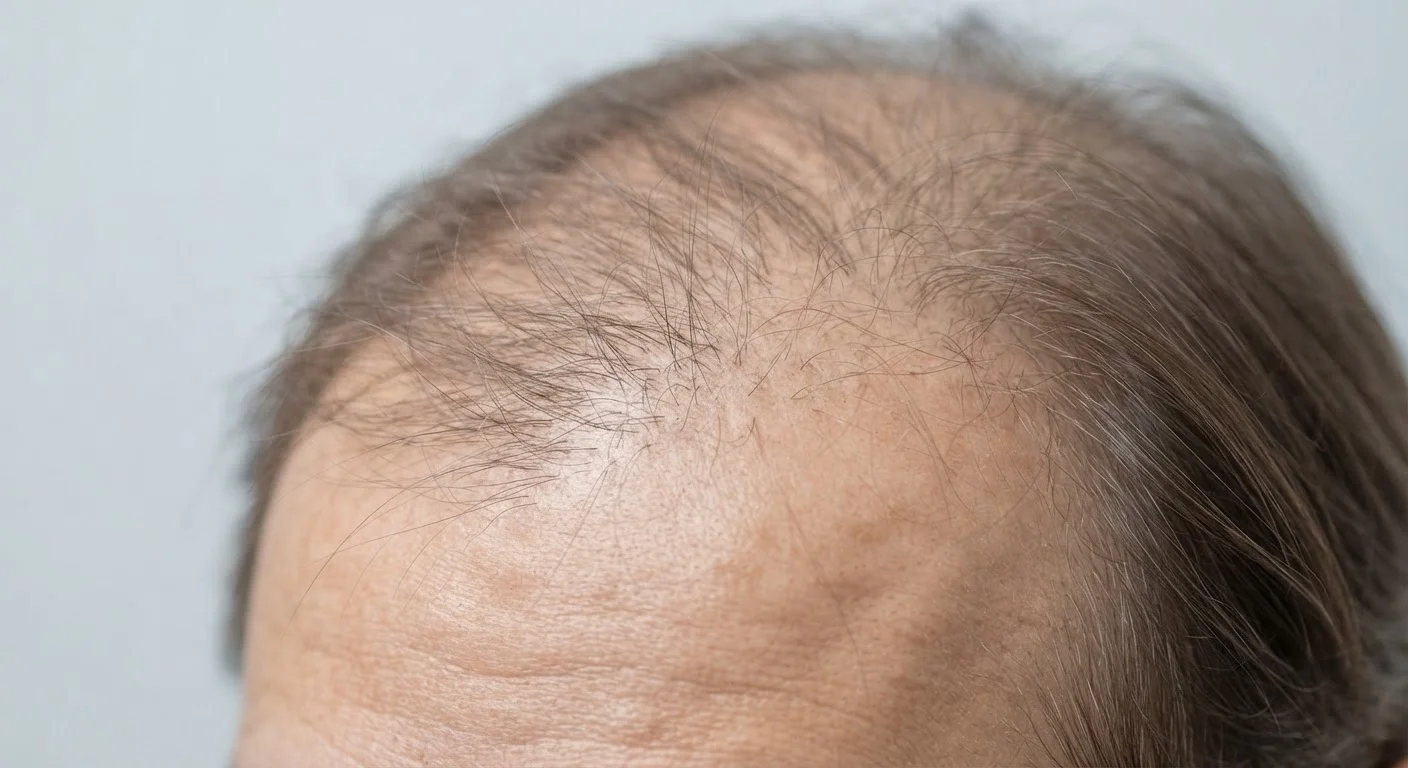
Hair regrowth is biological, not mechanical. Applying a product or taking a supplement creates conditions that may support follicle activity, but the follicle still operates on its own schedule. The anagen (active growth) phase, the catagen (transition) phase, and the telogen (resting) phase follow a cycle that no intervention can fast-forward. Most people who do not see results have not failed because their chosen approach is wrong. They have failed because they disrupted the process before it could complete.
Understanding the most common errors, and why they happen, gives readers a clearer path forward. For a fuller picture of why visible results take as long as they do, see why hair regrowth takes longer than most people expect.
Stopping an approach after four to six weeks because no visible change has appeared.
Why it happens: Most people expect regrowth to follow the same timeline as, say, a skincare routine. The hair growth cycle means that even a follicle that begins responding to an intervention will not produce visible new growth for several months.
Applying a topical treatment inconsistently, skipping days or varying the amount used.
Why it happens: Regrowth approaches require sustained presence at the follicle level. Unlike a one-time medication, topical agents for hair loss depend on cumulative exposure. Missing doses disrupts that continuity.
Pursuing a regrowth strategy without identifying the underlying cause of the hair loss.
Why it happens: Hair thinning looks the same whether it stems from androgenic alopecia, nutritional deficiency, thyroid dysfunction, or telogen effluvium (stress-related shedding). Without a diagnosis, the chosen approach may be entirely mismatched to the actual cause.
Neglecting scalp condition while focusing entirely on hair products.
Why it happens: Marketing for hair regrowth concentrates on the hair itself, which is visible. The scalp environment, including its inflammatory status and microcirculation, receives far less attention despite being where follicle health is determined.
Switching between multiple products or approaches frequently, never giving any one enough time to show an effect.
Why it happens: Impatience, combined with aggressive marketing for new products, drives frequent switching. Each new product resets the clock without any baseline established.
Ignoring lifestyle factors that affect the hair growth cycle, including sleep quality, chronic stress, and nutritional adequacy.
Why it happens: Hair regrowth is often treated as a local problem requiring a local solution. In reality, the follicle is sensitive to systemic signals: elevated cortisol from chronic stress can push follicles into the resting phase prematurely, and inadequate protein intake limits the raw material for keratin synthesis.
Overlooking the scalp as part of the problem
Attention tends to go to the hair shaft itself, which is already dead tissue. The living structure is the follicle, and the follicle sits in the scalp. Chronic inflammation, poor microcirculation, excess sebum buildup, or fungal disruption at the scalp level can impair follicle function regardless of what is applied on top. Scalp health and hair growth are more closely connected than most people recognize, and treating the scalp as a passive surface misses a meaningful variable.
Scalp inflammation can persist silently
Chronic low-grade inflammation on the scalp does not always produce obvious redness or itching. It can impair follicle cycling without any noticeable surface symptom. If regrowth efforts have stalled without a clear reason, scalp health is worth evaluating with a dermatologist rather than assumed to be fine.
Readers managing both hair thinning and scalp irritation should also consider whether a fungal component is involved. Misidentifying or ignoring a fungal condition on the scalp can prolong inflammation that directly affects follicle health. The same principle of thorough identification before treatment applies in treating fungal infections: errors that can slow recovery.
Addressing root causes instead of symptoms
Hair thinning can stem from androgens (hormones such as dihydrotestosterone), nutritional deficiencies in iron or ferritin, thyroid dysregulation, chronic stress, or autoimmune activity. Applying a topical agent to hormonally driven loss without addressing the hormonal environment is treating a symptom. Similarly, iron-deficiency-related shedding will persist as long as iron stores remain depleted, regardless of what sits on the scalp.
Before investing significant time in any regrowth strategy, it is worth identifying the likely cause. A self-assessment checklist before starting any hair regrowth approach can help clarify which factors are worth discussing with a clinician. A clinician can order relevant blood work and rule out conditions that surface-level approaches cannot resolve.
Root cause identification matters first
Hair thinning driven by thyroid dysfunction, iron deficiency, or autoimmune activity will not respond to topical or cosmetic interventions alone. Treating the surface without addressing an internal driver can lead to months of effort with no meaningful result. A clinician evaluation before committing to any regrowth plan is not optional when systemic causes are possible.
When an internal factor such as a hormonal or nutritional issue is driving the loss, the choice between topical and systemic approaches also becomes more consequential. Topical treatments vs oral approaches in hair regrowth differ substantially in how they work and what conditions they are suited to.
Separating fact from widespread belief
A significant portion of effort in hair regrowth goes toward approaches that have little or no scientific support, because the beliefs underlying them are simply wrong. Assumptions about hat-wearing, scalp massage intensity, or the inheritance of hair loss traits from one parent persist despite evidence to the contrary. Acting on inaccurate beliefs wastes time and can delay appropriate care. Hair loss myths that persist despite the evidence reviews which common claims hold up and which do not.
This article is for informational purposes only and is not medical advice. Readers experiencing hair loss should consult a qualified healthcare professional to identify the cause and discuss appropriate options.