

Key Takeaways
Hair growth cycle
The hair growth cycle is the repeating biological process every hair follicle goes through: a growth phase, a transitional phase, and a resting phase before the hair sheds and the cycle restarts. Each phase has a fixed duration that varies by genetics, age, and health. Because most follicles are in different phases at any given moment, change at the scalp level is always gradual.
The anagen (growth) phase lasts two to seven years per follicle; the telogen (resting) phase lasts approximately three months, during which the follicle produces no visible shaft growth.
The biology behind the delay
Hair does not grow continuously. Each follicle moves through a fixed cycle: anagen (active growth), catagen (transition), and telogen (rest). At any moment, roughly 85 to 90 percent of scalp follicles are in anagen, which can last years. The remaining follicles are resting and producing nothing visible. When a follicle enters telogen, the hair shaft it holds will shed after roughly three months, and the follicle will not begin producing a new shaft until the next anagen phase starts.
This staggered, asynchronous cycling means that even if every follicle on the scalp responded immediately to an intervention, the visible result would still appear gradually as individual follicles cycled back into anagen at different times. There is no biological shortcut around this timing.
For a fuller picture of follicle structure and how these phases interact with common causes of thinning, see Hair Regrowth From Root to Tip.
Why shedding can precede regrowth
One of the most discouraging experiences people report is increased shedding in the first weeks after starting an intervention. This happens because some approaches prompt follicles that were stuck in a prolonged resting phase to finally shed their old hair shafts and re-enter active growth. The shedding is the first step of recovery, not evidence that the approach is making things worse.
Stress, illness, and nutritional shifts can also push large numbers of follicles into telogen simultaneously, a condition called telogen effluvium. The resulting shed typically occurs two to three months after the triggering event, so people often blame whatever they started recently rather than what happened months earlier. Understanding this delay prevents misattribution and premature abandonment of a sound approach.
Track progress with monthly photos
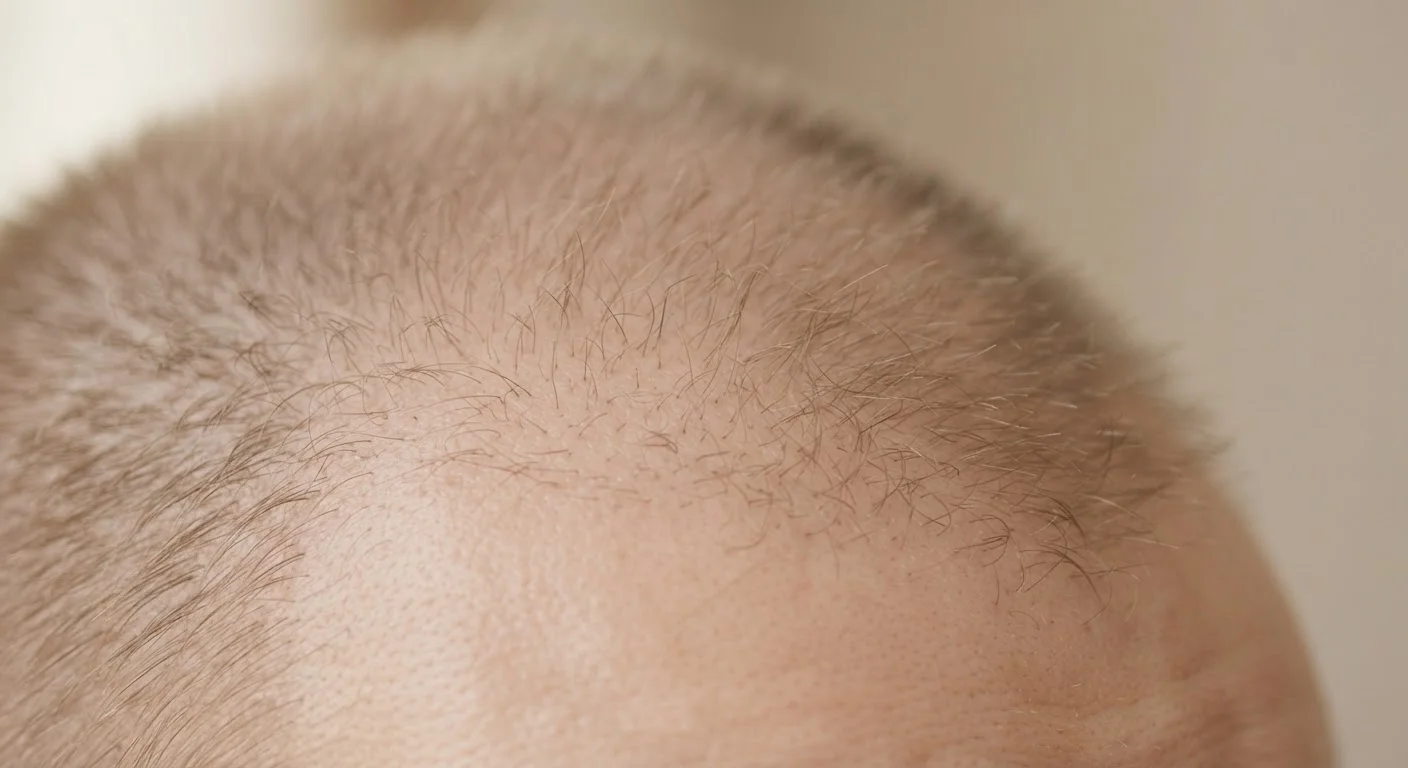
Daily mirror checks are unreliable because minor changes in lighting, styling, or moisture make hair appear thicker or thinner. Taking standardized photos in the same location, under the same lighting, once a month gives a much more accurate picture of cumulative change over time. Focus on consistent angles at the hairline, part line, and crown.
How underlying causes extend the timeline
When hair thinning has a systemic cause, such as iron deficiency, thyroid dysfunction, or hormonal change, no topical or oral intervention will produce lasting regrowth until that cause is addressed. Follicles require adequate ferritin, protein, zinc, and other substrates to build a hair shaft. A follicle that is resource-limited will remain in telogen or produce thin, fragile shafts even under otherwise favorable conditions.
Scalp health matters too. Chronic inflammation, excess sebum, or microbial imbalance can impair follicle function at the local level. Scalp health and its effect on follicle function is often underestimated, yet it directly shapes how well follicles respond once systemic factors are corrected.
Because correcting a deficiency and then waiting for follicles to complete a new cycle stacks two delays on top of each other, people with nutritional or health-related causes of loss typically face a longer timeline than those with purely mechanical or genetic patterns. This is not a failure of the body; it is the body working in sequence.
Setting a realistic evaluation window
Most clinically studied approaches to hair loss are assessed at the three-month mark for early signals and at six to twelve months for meaningful conclusions. Evaluating an intervention at six weeks tells almost nothing, because follicles that have just re-entered anagen have produced at most a few millimeters of shaft, which is not yet visible at the surface.
Photography under consistent lighting, taken monthly, is a more reliable tracking method than daily mirror checks, which are too sensitive to lighting, styling, and temporary variation. Progress photos at the hairline, crown, and temples taken at the same time of day provide a baseline that makes slow change visible over time.
Before committing time and effort to any approach, a structured review of possible contributing factors helps direct attention where it matters most. A self-assessment checklist for hair regrowth provides a framework for that review. Common missteps that reset the clock unnecessarily are covered in common errors that undermine regrowth efforts.
This article is for informational purposes only and is not medical advice. Consult a qualified healthcare professional for evaluation and guidance specific to your health situation.