

Key Takeaways
Our Verdict
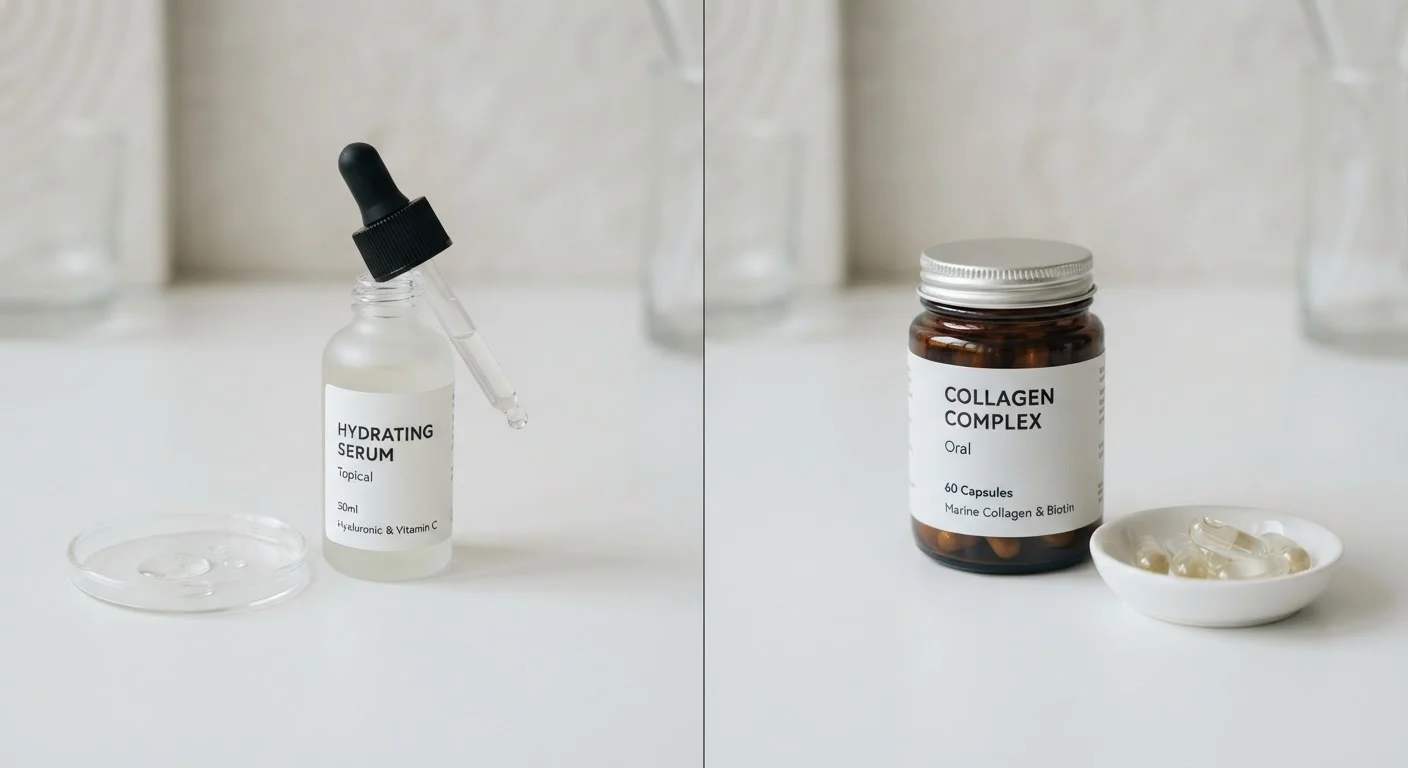
Topical treatments are generally better tolerated and act directly at the scalp, making them a common first step for localized or androgen-driven hair loss. Oral approaches reach follicles through circulation and may be appropriate when topical options alone are insufficient, but they carry a broader systemic effect that requires medical oversight. For most people, the choice depends on the underlying cause of hair loss, not personal preference alone.
| Best for | Recommended |
|---|---|
| Those seeking a localized approach with fewer systemic effects | Topical treatments |
| Those with androgen-driven hair loss not responding to topical-only approaches | Oral approaches (under medical supervision) |
| Those with nutritional deficiencies contributing to shedding | Oral supplementation alongside topical care |
| Those managing scalp conditions alongside hair loss | Combination of topical and oral as directed by a clinician |
How topical treatments work at the follicle level
Topical hair loss treatments are applied directly to the scalp, where active ingredients are absorbed through the skin to reach the hair follicle. Because delivery is local, systemic absorption is limited, which generally reduces the risk of body-wide side effects.
The most studied topical agent is minoxidil, a vasodilator that widens blood vessels in the scalp, improving oxygen and nutrient delivery to follicles. It extends the anagen (active growth) phase of the hair cycle and has decades of clinical use behind it. Other topical formulations include anti-androgens, prostaglandin analogs, and medicated shampoos containing ingredients such as ketoconazole, which addresses fungal contributors to scalp inflammation.
Absorption varies depending on vehicle formulation. Foam preparations tend to penetrate more evenly than solutions, and alcohol-based carriers can cause scalp irritation in some users. Consistent daily application is necessary because the follicular effect does not persist once treatment stops. For a broader look at follicle biology and what drives shedding, see our beginner's overview of hair regrowth.
| Topical treatments | Oral approaches | |
|---|---|---|
| Primary mechanism | Local scalp absorption | Systemic blood circulation |
| Typical target | Follicle environment, blood flow | Hormones, nutrient levels, enzymes |
| Side effect scope | Mostly local (irritation, dryness) | Potential body-wide effects |
| Medical supervision required | Varies by agent | Almost always required |
| Adherence demands | Daily correct application | Consistent oral dosing |
| Visible result timeline | 4 to 6 months typical | 6 to 12 months for some agents |
| Suitable hair loss types | Androgenetic, localized | Androgenetic, nutritional deficiency |
How oral approaches act systemically
Oral medications and supplements enter the bloodstream and act throughout the body, reaching follicles via circulation rather than surface application. This systemic reach is both the mechanism and the trade-off: the intervention can address causes that topical treatment cannot, but it also affects tissues beyond the scalp.
Finasteride and dutasteride, for example, inhibit the enzyme 5-alpha reductase, which converts testosterone to dihydrotestosterone (DHT). DHT is the androgen most associated with follicle miniaturization in androgenetic alopecia. Because these drugs act hormonally across the whole body, their side effect profiles require careful consideration and ongoing medical supervision. Spironolactone, sometimes used for women with androgen-related hair loss, similarly works systemically as an anti-androgen and diuretic.
Oral supplementation occupies a different category. Iron, zinc, biotin, and vitamin D deficiencies can each contribute to diffuse shedding, particularly in telogen effluvium. Correcting a confirmed deficiency through oral supplementation may reduce excessive shedding, though supplements do not stimulate regrowth when nutritional status is already adequate. The distinction between androgenetic alopecia and telogen effluvium matters here; understanding the two conditions helps clarify which approach is appropriate.
Key differences across practical factors
Beyond mechanism, topical and oral approaches differ in several ways that affect real-world use. Topical treatments require correct technique: even product distribution, adequate contact time, and daily adherence. Uneven application is a common reason outcomes fall short of expectations, as covered in a review of frequent hair regrowth errors.
Oral medications typically have a simpler dosing routine but require baseline health assessments before starting. Liver function, hormone levels, and blood pressure may all be relevant depending on the agent, since systemic drugs are metabolized through pathways that interact with other conditions and medications. The liver's role in metabolizing drugs is one reason medical review before starting oral treatment is necessary rather than optional.
Timeline expectations also differ. Neither route produces rapid visible results; the hair growth cycle has built-in delays. Why regrowth takes longer than most people expect explains the biological basis for those delays. Topical treatments generally show initial shedding reduction before visible density changes, while oral anti-androgen medications may take six months or more before measurable improvement appears.
Scalp health itself influences how well topical agents absorb and function. Inflammatory conditions, seborrheic dermatitis, or fungal overgrowth can impair follicle performance regardless of treatment choice. Combining external and internal approaches to scalp health addresses how these layers interact.
Choosing between approaches: what shapes the decision
No single approach fits every type of hair loss. The underlying cause determines which route is appropriate. Androgen-driven loss in men often responds to both topical minoxidil and oral 5-alpha reductase inhibitors, sometimes used together under physician guidance. Women with androgen-related loss face a narrower pharmacological landscape because several oral agents used in men are contraindicated during pregnancy.
Diffuse shedding linked to nutritional gaps, thyroid dysfunction, or systemic stress is better addressed by identifying and correcting the root cause than by applying a hair-specific topical. In these cases, oral supplementation or medical treatment of the underlying condition takes priority.
Combination approaches are common in clinical practice because the two routes address different aspects of follicle health simultaneously. A physician or dermatologist is best placed to assess blood work, scalp health, and medical history before recommending a direction. Self-prescribing oral medications carries meaningful risk, and this decision should not be made without professional evaluation.
This article is for informational purposes only and does not constitute medical advice. Consult a qualified healthcare professional before starting, stopping, or changing any treatment for hair loss.