

Key Takeaways
Gut-brain axis
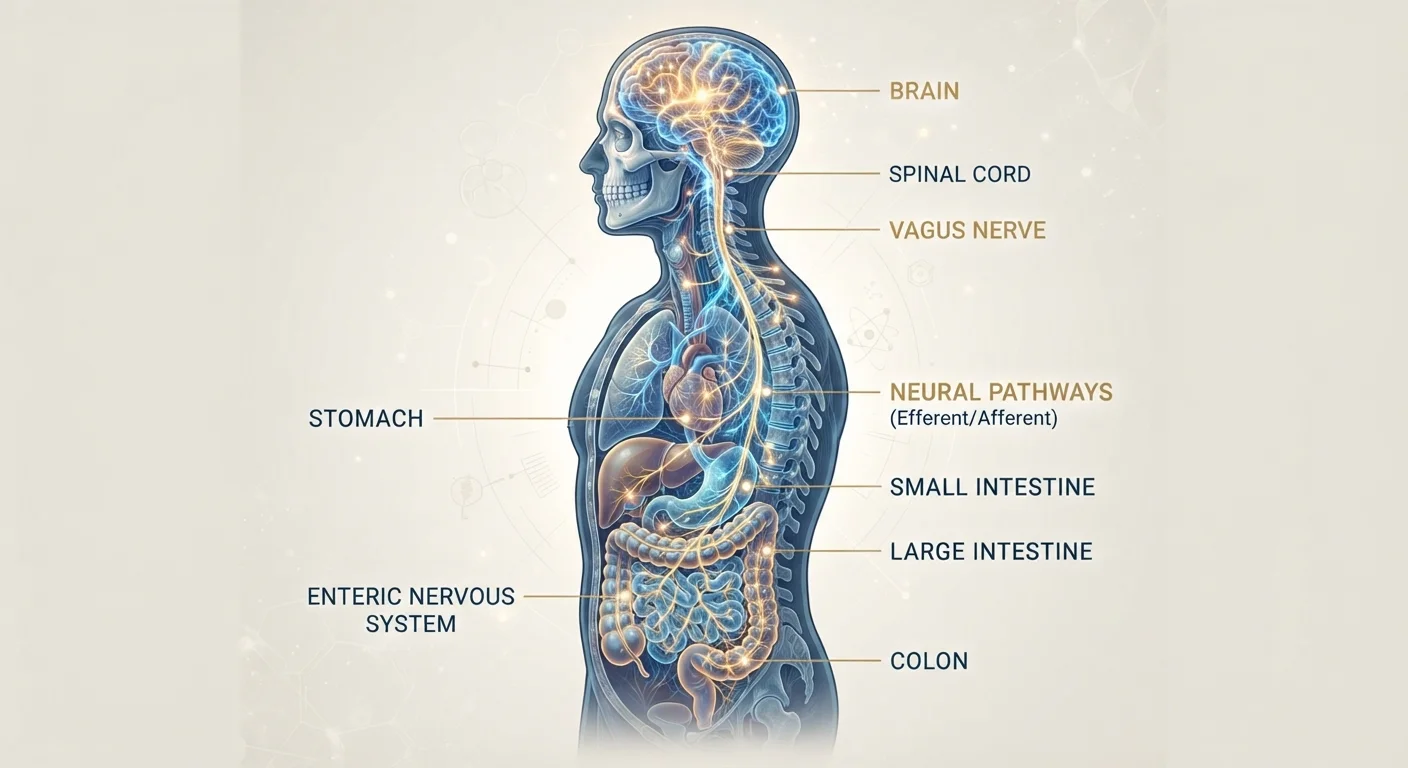
The gut-brain axis is the two-way communication network between your digestive tract and your brain. It carries signals in both directions through nerves, hormones, and chemical messengers produced by gut bacteria. This network means your digestive system can influence your mood, stress response, and mental clarity, while your brain also shapes how your gut functions.
The vagus nerve is the primary physical conduit of this axis, transmitting signals between the enteric nervous system (the nerve network embedded in the gut wall) and the central nervous system. Gut microbiota contribute through the production of neuroactive compounds including short-chain fatty acids and neurotransmitter precursors.
What the gut-brain axis actually is
Your gut and brain are in constant contact. They exchange information through a network that includes the longest nerve in the body, a suite of hormones, and chemical signals produced by trillions of bacteria. This network is the gut-brain axis.
The term covers three overlapping channels. First, the vagus nerve carries electrical signals between the brainstem and the organs of the abdomen, with the majority of traffic traveling upward, from gut to brain. Second, the gut lining releases hormones and peptides that circulate through the bloodstream and reach the brain. Third, gut bacteria produce short-chain fatty acids, neurotransmitter precursors, and other compounds that interact with both local nerve endings and the broader immune system.
For a deeper look at how these mechanisms connect to whole-body health, see how the digestive system shapes whole-body health.
~90%
Of body's serotonin produced in the gut
Research in enteric neuroscience consistently finds that most serotonin synthesis occurs in the gastrointestinal tract, where it regulates gut motility and sends signals to the brain via the vagus nerve.
500 million
Neurons in the enteric nervous system
The enteric nervous system, embedded in the gut wall, contains roughly 500 million neurons, comparable in complexity to the spinal cord, according to established gastroenterology literature.
80%
Of vagus nerve fibers carry signals upward
Neuroanatomical research indicates that approximately 80% of vagal fibers are afferent, meaning they transmit information from the gut to the brain rather than the other way around.
The role of gut bacteria in this network
The roughly 38 trillion bacteria living in your gastrointestinal tract are not passive passengers. They break down dietary fiber into short-chain fatty acids, which feed the cells lining the gut and have anti-inflammatory effects that extend beyond the gut wall. Some bacterial species convert amino acids into serotonin precursors; around 90% of the body's serotonin is synthesized in the gut, not the brain.
Gut bacteria also regulate the immune system, which has its own line of communication with the brain. When microbial balance shifts, inflammatory signals can increase, and those signals travel through the axis. This is one reason researchers studying mood and cognition are paying close attention to the microbiome, though it remains an active area of investigation rather than settled clinical practice.
The relationship between gut hormones and the broader endocrine system adds another layer to this picture. The gut-hormone axis explains how digestive health connects to hormone metabolism more broadly.
How stress travels both ways
The axis is bidirectional, and stress is a clear example of traffic moving from brain to gut. When the brain perceives a threat, it activates the stress response, which alters gut motility, changes the secretion of digestive fluids, and shifts blood flow away from the intestines. Many people experience this as stomach discomfort before a difficult conversation or during a period of anxiety.
The reverse is also true. Gut inflammation or microbial disruption can generate signals that reach areas of the brain involved in mood regulation. This two-way dynamic is why conditions such as irritable bowel syndrome frequently occur alongside anxiety, and why researchers are examining both directions when studying either condition.
The gut-brain connection in more detail covers the mechanisms behind this relationship, including how stress hormones reshape the microbiome over time.
Support the axis through daily habits
A diet that includes fiber-rich vegetables, legumes, and fermented foods supplies substrates that gut bacteria use to produce beneficial compounds. Regular physical activity and consistent sleep both modulate the stress response, which affects gut function through the axis. These are general lifestyle considerations, not medical treatments, and a healthcare provider can help you assess what is appropriate for your situation.
What this means for everyday health
Understanding the gut-brain axis matters because it reframes digestive health as a whole-body concern. Chronic gut symptoms are worth taking seriously not only for comfort but because persistent disruption in this network may have broader effects on attention, mood stability, and immune function.
Dietary patterns that support a diverse microbiome, adequate sleep, and stress management all interact with this axis. None of these is a cure, and the science connecting specific interventions to specific outcomes along the axis is still maturing. Anyone experiencing persistent digestive symptoms or mood changes should consult a qualified healthcare provider rather than self-managing based on general information.
If cognitive symptoms like mental fog concern you, how poor gut health can surface as mental fog explores the connection between digestive disruption and cognitive clarity in more depth.
This article is for informational purposes only and is not medical advice. Consult a qualified healthcare professional for any health concerns or before making changes to your diet or treatment plan.