
The Scalp Microbiome: An Introduction to the Organisms Living on Your Head

Key Takeaways
Start here
What is the scalp microbiome?
Next
The main residents: bacteria and fungi
Then
How microbial balance shapes scalp symptoms
Dig deeper
Internal factors that shift microbial balance
Apply it
What you can reasonably do
What is the scalp microbiome?
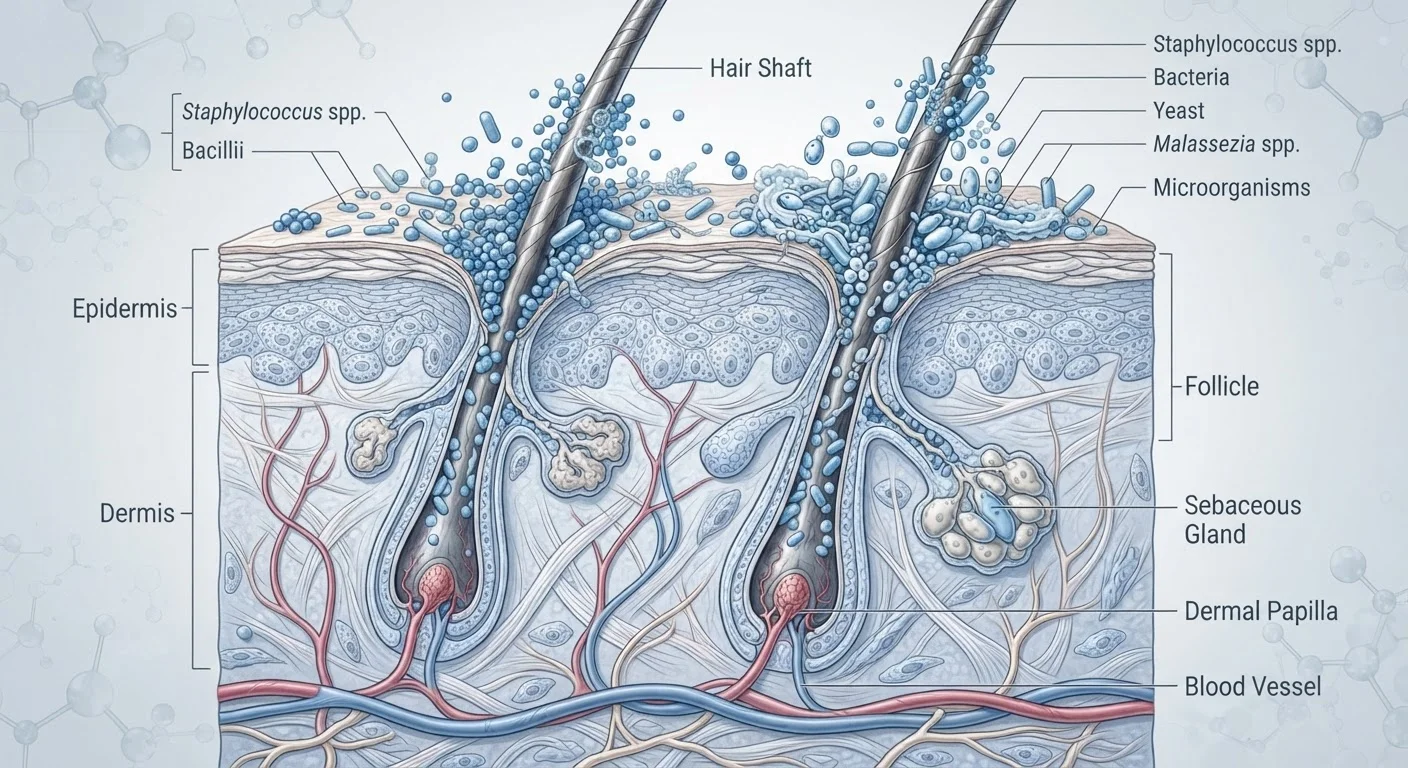
The scalp is a specialized skin environment. It has a high density of hair follicles, sebaceous (oil-producing) glands, and an average pH slightly lower than skin on other body sites. These conditions attract a specific community of microorganisms, collectively called the scalp microbiome.
This community includes bacteria, fungi, and to a lesser degree, mites and viruses. Most of these organisms are commensal, meaning they live on the scalp without causing harm under normal conditions. Some are actively beneficial, competing against pathogens and supporting the skin's barrier function.
To understand why the scalp behaves differently from skin on your arm or abdomen, it helps to read about the underlying anatomy. Our overview of scalp biology covers how follicles and sebaceous glands create the physical conditions that microbial communities depend on.
Scalp microbiome
The collective community of microorganisms, including bacteria and fungi, that live on the scalp surface and within hair follicles.
Commensal organism
A microorganism that lives on or in the body without causing harm under normal conditions, and may even provide benefit by competing against harmful species.
Malassezia
A genus of yeast-like fungi that depends on lipids for survival and is the dominant fungal resident on the human scalp. Overgrowth or inflammatory responses to its metabolites are linked to dandruff and seborrheic dermatitis.
Sebum
An oily substance produced by sebaceous glands in the skin. It lubricates the hair and scalp and serves as the primary nutrient source for Malassezia fungi.
Acid mantle
A thin, slightly acidic film on the skin surface formed by sebum and sweat. It helps maintain microbial balance and protects against certain pathogens.
Seborrheic dermatitis
A common inflammatory skin condition affecting oily areas like the scalp, characterized by redness, scaling, and itching. It is associated with an exaggerated immune response to Malassezia metabolites.
The main residents: bacteria and fungi
Bacterial populations on the scalp are dominated by Cutibacterium acnes (formerly called Propionibacterium acnes) and several species of Staphylococcus, including Staphylococcus epidermidis. Both are common across oily skin sites. Cutibacterium acnes metabolizes sebum triglycerides into free fatty acids, which maintain a mildly acidic scalp pH and inhibit some competing microbes.
Fungi on the scalp are almost entirely from the genus Malassezia. Unlike most fungi, Malassezia species cannot synthesize their own fatty acids and depend on the sebum-rich scalp environment to survive. Because of this dependency, sebum output is one of the strongest predictors of Malassezia abundance.
Research published in dermatology literature has identified at least 14 Malassezia species on human skin. Malassezia globosa and Malassezia restricta are consistently the most prevalent on the scalp. Their metabolic activity, specifically the production of oleic acid from sebum, can disrupt the scalp's barrier and trigger an inflammatory response in susceptible individuals.
How microbial balance shapes scalp symptoms
When the scalp microbiome is in balance, inflammation stays low and the skin barrier functions normally. When balance shifts, symptoms follow.
Dandruff (pityriasis capitis) and seborrheic dermatitis are the most widely studied outcomes of microbial imbalance. Both conditions involve accelerated skin cell turnover on the scalp, producing the visible flakes that many people associate purely with dryness. The actual driver is more often an inflammatory reaction to metabolites produced by Malassezia. You can read more about how these visible signals connect to systemic health in our article on what scalp flaking and oiliness can signal.
Persistent inflammation at the follicle level is also relevant to hair shedding. A scalp in chronic low-grade inflammation is a suboptimal environment for follicle cycling. Our article on scalp health and hair growth explores that connection in more detail.
Dandruff is not a hygiene problem
The flaking associated with dandruff is driven by microbial metabolites and an inflammatory response, not by infrequent washing. Increasing wash frequency can sometimes worsen symptoms by stripping the scalp's acid mantle and altering microbial populations. A consistent, appropriately formulated cleansing routine is more effective than aggressive washing.
Internal factors that shift microbial balance
The scalp microbiome does not exist in isolation. Several internal systems directly affect which organisms thrive there.
Hormones: Androgens drive sebaceous gland activity. Higher androgen levels increase sebum output, which expands the nutrient base available to Malassezia. This is why seborrheic dermatitis is more prevalent after puberty and in individuals with androgen-sensitive conditions. The hormonal balance hub covers how hormone fluctuations affect multiple body systems, including skin.
Immune function: Immune tolerance to commensal organisms keeps inflammation low. When immune regulation is disrupted, the scalp can mount an exaggerated response to otherwise harmless microbial metabolites. Scalp inflammation can therefore be a sign of broader immune dysregulation rather than a localized skin problem.
Nutrition and liver health: Zinc, biotin, and essential fatty acids support skin barrier integrity. Their absence can alter the composition and cohesion of the lipid layer that microbes interact with. Liver function affects how fatty acids and hormones are metabolized; compromised processing can change sebum composition and, by extension, the environment Malassezia inhabits. See our liver health hub for context on how hepatic function connects to broader skin health.
What you can reasonably do
Managing the scalp microbiome starts with avoiding the things that consistently disrupt it. Frequent use of harsh, high-pH shampoos, antibacterial washes, and certain preservatives can reduce microbial diversity and alter the scalp's acid mantle. These changes may reduce protective bacteria along with problematic ones.
Antifungal shampoos containing zinc pyrithione, selenium sulfide, or ketoconazole have a well-established track record for reducing Malassezia populations and relieving dandruff symptoms. They are not cures; symptoms typically return when use stops, because Malassezia is a permanent resident, not an infection to be cleared.
Supporting internal health through consistent sleep, stress management, and a diet adequate in zinc and omega-3 fatty acids addresses some of the upstream factors that shift microbial balance. For a structured approach to daily scalp and skin care that accounts for these biological realities, our article on building a scalp care routine grounded in physiology is a useful next step.
Anyone experiencing persistent scaling, redness, or hair thinning should consult a dermatologist rather than relying solely on over-the-counter adjustments. Scalp conditions can overlap in presentation, and accurate identification matters before treatment.
This article is for informational purposes only and is not medical advice. Consult a qualified healthcare professional for personal health concerns, diagnosis, or treatment decisions.