
Reading Your Scalp: What Flaking, Redness, and Oiliness Can Signal About Internal Health

| Primary cause of dandruff | Malassezia yeast overgrowth combined with immune response |
| Hormone most linked to excess scalp oil | Dihydrotestosterone (DHT) |
| Nutritional deficiencies associated with flaking | Zinc, essential fatty acids, biotin |
| Scalp sebaceous gland density | Approximately 400-900 glands per square centimeter (Dermatology textbook estimates; varies by individual) |
| Conditions that mimic dandruff | Dry scalp, psoriasis, tinea capitis, contact dermatitis |
| Internal systems that affect scalp condition | Endocrine (hormonal), immune, hepatic (liver), and nutritional |
What your scalp surface is actually telling you
The scalp is not simply a base for hair. It is skin with a dense network of follicles, sebaceous glands, blood vessels, and immune cells, all of which respond to signals from inside the body. Hormonal fluctuations, nutritional gaps, and immune activity can all alter how the scalp looks and feels before other symptoms become obvious.
Flaking, redness, and excess oiliness are three of the most common scalp complaints among adults in the U.S. Each has a distinct biological profile, and each can point toward internal conditions that deserve attention. This reference covers what drives these symptoms at a physiological level and when they may warrant a conversation with a dermatologist or primary care provider.
For a grounding in how the scalp's skin differs structurally from the rest of the body, see Scalp Biology 101.
| Primary cause of dandruff | Malassezia yeast overgrowth combined with immune response |
| Hormone most linked to excess scalp oil | Dihydrotestosterone (DHT) |
| Nutritional deficiencies associated with flaking | Zinc, essential fatty acids, biotin |
| Scalp sebaceous gland density | Approximately 400-900 glands per square centimeter (Dermatology textbook estimates; varies by individual) |
| Conditions that mimic dandruff | Dry scalp, psoriasis, tinea capitis, contact dermatitis |
| Internal systems that affect scalp condition | Endocrine (hormonal), immune, hepatic (liver), and nutritional |
Flaking: dandruff, dry scalp, and what lies beneath
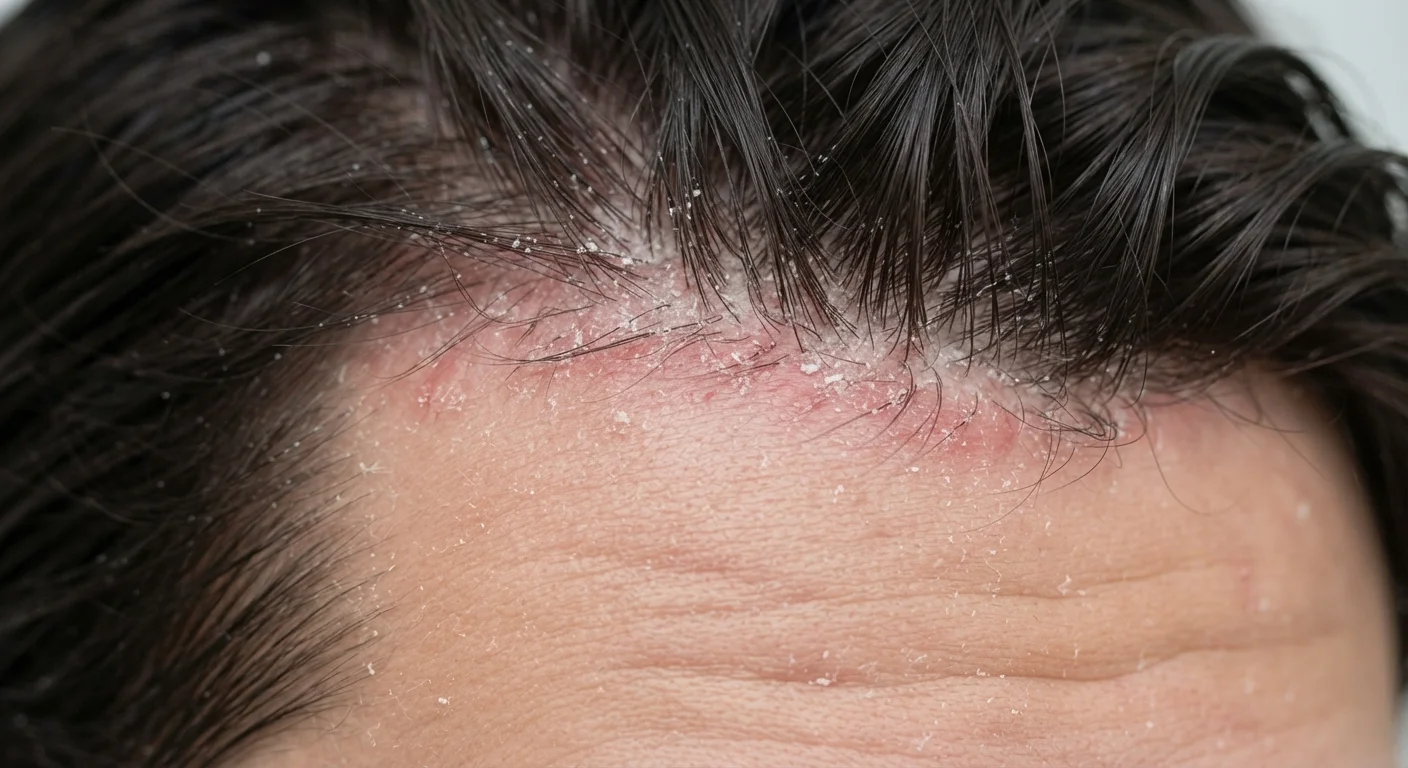
Scalp flaking comes from two distinct mechanisms that look similar on the surface but have different causes. Dry scalp produces small, white flakes because the skin lacks adequate moisture and sheds more rapidly. Dandruff, clinically associated with seborrheic dermatitis, involves an overgrowth of Malassezia yeast on the scalp, which triggers localized inflammation and accelerates cell turnover, producing larger, oily flakes.
Internally, flaking can connect to several factors. Zinc deficiency is associated with impaired skin barrier function and increased shedding. Low intake of essential fatty acids (omega-3s found in fatty fish and certain seeds) can reduce the skin's capacity to retain moisture. Dysregulation of the immune system, as seen in psoriasis, can dramatically speed up cell turnover, producing thick, silvery scale rather than the finer flaking of dandruff.
Distinguishing dry scalp from dandruff before treating either is important because moisturizing approaches can worsen fungal overgrowth, while antifungal treatments do nothing for a barrier that simply lacks hydration.
The scalp microbiome also shapes flaking risk. A community of microorganisms on the scalp modulates Malassezia levels. Disrupting that balance through over-washing, harsh surfactants, or antibiotic use can shift the microbial environment in ways that favor inflammation. More on how these organisms interact is covered in The Scalp Microbiome.
Redness: inflammation pathways and systemic connections
Scalp redness signals active inflammation. The source varies: contact dermatitis from a product ingredient, seborrheic dermatitis driven by immune response to yeast, scalp psoriasis triggered by an overactive immune system, or folliculitis caused by bacterial or fungal infection of individual hair follicles.
What distinguishes scalp redness as a potential systemic marker is its persistence and pattern. Redness that spreads beyond the scalp to the nasolabial folds, eyebrows, or ears fits the distribution of seborrheic dermatitis, a condition linked in research to immune function, stress hormones, and in some contexts to neurological conditions such as Parkinson's disease. Redness accompanied by well-defined plaques with silvery scale is more characteristic of psoriasis, an autoimmune condition associated with systemic inflammation that can affect joints and cardiovascular health.
Chronic, low-grade scalp inflammation can also affect the hair follicle environment. Scalp inflammation is not limited to surface symptoms: research links persistent follicular inflammation to miniaturization of the hair shaft over time.
This article is for general informational purposes and does not constitute medical advice. Anyone experiencing persistent scalp redness should consult a dermatologist for an accurate diagnosis.
Oiliness: sebum production and hormonal regulation
Sebaceous glands on the scalp are among the most active oil-producing structures in the body. The hormone dihydrotestosterone (DHT), derived from testosterone by the enzyme 5-alpha reductase, directly stimulates sebum output. This is why excess scalp oiliness often increases during puberty, the premenstrual phase of the menstrual cycle, or periods of elevated androgen activity such as polycystic ovary syndrome (PCOS).
Sebum itself has protective functions. Sebum is not inherently a problem: it forms part of the scalp's antimicrobial barrier and keeps the stratum corneum (the outermost skin layer) pliable. Excess sebum becomes problematic when it creates conditions that favor Malassezia proliferation or clogs follicle openings, both of which are linked to dandruff and to some forms of hair thinning.
Liver function is less commonly discussed in relation to scalp oiliness, but the liver processes sex hormones and regulates their circulating levels. When liver detoxification pathways are burdened, hormonal metabolites may linger longer, potentially amplifying androgenic effects on sebaceous glands. Liver health and hormonal balance are therefore connected in ways that can surface on the scalp.
Diet influences sebum composition as well. High glycemic diets raise insulin levels, which in turn stimulate androgen production. Reducing processed carbohydrate intake is one dietary approach that some dermatology researchers have examined in relation to sebum reduction, though individual responses vary and no single diet is universally effective.
See Topical vs. internal approaches to scalp health for how external products and nutritional strategies address different layers of the same problem.
When to seek professional evaluation
Scalp symptoms that are mild, intermittent, and clearly linked to a known trigger (a new shampoo, seasonal dryness) can often be managed with straightforward adjustments. Persistent or worsening symptoms are a different situation. Thick scaling that does not respond to over-the-counter antifungal or moisturizing products, redness that spreads or causes pain, or a sudden increase in hair shedding alongside scalp changes all warrant assessment by a dermatologist.
A clinician can distinguish between conditions that look similar but require different treatments, including seborrheic dermatitis, psoriasis, tinea capitis (a fungal infection), and lichen planopilaris (a scarring form of hair loss). Blood work may be ordered to check thyroid function, ferritin levels, androgen profiles, or nutritional markers, since scalp symptoms sometimes surface before other signs of these underlying shifts appear.
Scalp health and hair growth are closely linked: managing scalp inflammation or sebum imbalance early may help preserve the follicle environment before shedding becomes significant.
Sebaceous gland
A small gland in the skin that produces sebum, a waxy oil that lubricates the skin and hair. On the scalp, these glands are particularly numerous and active.
Malassezia
A genus of yeast that naturally lives on human skin. In excess, it can trigger the inflammatory response associated with dandruff and seborrheic dermatitis.
Seborrheic dermatitis
A common chronic skin condition causing flaking, redness, and scaling, primarily in areas with high sebaceous gland density such as the scalp, face, and chest.
Dihydrotestosterone (DHT)
An androgen hormone derived from testosterone through the action of 5-alpha reductase. DHT stimulates sebum production and, in genetically susceptible individuals, can contribute to hair follicle miniaturization.
Stratum corneum
The outermost layer of the epidermis, made up of dead skin cells. It acts as the primary barrier against moisture loss and environmental irritants.
Folliculitis
Inflammation or infection of hair follicles, often caused by bacteria or fungi. On the scalp, it appears as small red bumps or pustules around individual follicle openings.
Scalp microbiome
The community of microorganisms, including bacteria and yeast, that live on the scalp's surface. This microbial balance influences inflammation levels, sebum metabolism, and susceptibility to conditions like dandruff.
Psoriasis
An autoimmune condition that accelerates the skin cell cycle, causing cells to build up rapidly on the surface and form thick, scaly plaques. Scalp psoriasis is one of the most common forms.